EN
EN

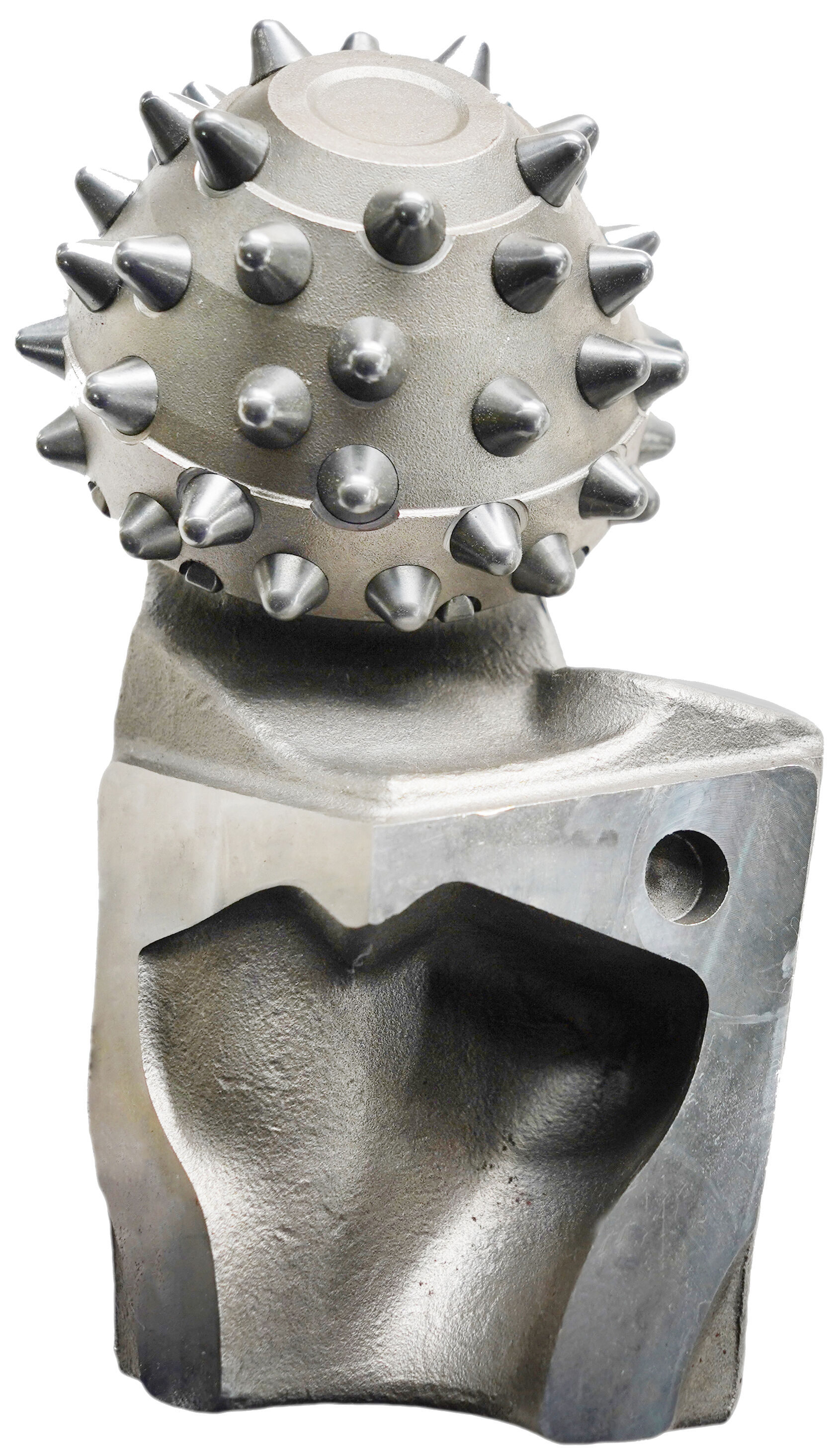
Formation Hardness Compatibility: Matching Bit Design to Rock Strength
Selecting the right drill bit—whether bullet teeth or single roller bits—hinges critically on formation hardness, measured by Uniaxial Compressive Strength (UCS). Mismatched tools accelerate wear, reduce efficiency, and inflate project costs.
Why bullet teeth excel in soft to medium-hard formations (UCS < 80 MPa)
Bullet teeth work by focusing force at specific points to break apart rocks that don't hold together well. These tools have long tungsten carbide ends that dig into softer materials such as shale or limestone without needing much twisting force. Field tests show they can drill through these formations 18 to 25 percent faster compared to older models. They really shine when dealing with clay filled areas or rocks full of tiny holes where other methods just crush instead of cutting effectively. But there's a catch too. When working on layers containing lots of quartz, the tips tend to chip away sooner than expected, which means operators need to watch out for wear in those particular conditions.
Where single roller bits dominate: Hard, abrasive strata (UCS 100 MPa) and quartz-rich rock
When bullet teeth struggle, single roller bits tend to perform better in tough drilling scenarios. These bits use rolling cones that spread the workload over several carbide inserts, which allows them to crush hard rocks such as granite or basalt using compression instead of relying on shear forces. This approach cuts down on hot spots forming around individual points and generally makes the bit last about twice as long when working through quartzite formations. The bearing system is also sealed against dirt and debris getting inside, so they stay stable even under extremely high pressures exceeding 100 MPa. Real world testing at various mines has shown operators replace these bits roughly 30 percent less often compared to other types under similar operating conditions.
Mechanical Action & Load Transfer: Point-Attack Versus Rolling-Crushing Dynamics
Stress concentration and carbide tip failure modes in bullet teeth
The bullet-shaped teeth work by concentrating their attack at specific points to deliver maximum force against rock surfaces. These teeth have conical carbide tips that channel the load down to tiny contact areas measuring less than 1 square millimeter. This creates extremely high stress levels, often over 2,500 megapascals, which is enough to crack almost any sedimentary rock formation. Think about it like pushing a pencil point into clay - the smaller the contact spot, the deeper it goes for the same amount of pressure applied. But there's a downside to this intense concentration of stress. When working in rocks rich in quartz, the uneven forces lead to chips forming along the carbide edges. Repeated impacts also create cracks that spread outward through the tungsten carbide base material. Things get really bad when the temperature at the tip climbs above 650 degrees Celsius during long drilling sessions. At these temps, the material starts breaking down faster due to heat stress. The failure process typically follows three main phases first comes the gradual rounding of edges as they start wearing down, then comes more serious cracking patterns across the surface, and finally complete breakage when the damage becomes too extensive to handle.
Roller cone kinematics: How axial load, slippage control, and torque efficiency drive performance
Single roller bits work differently from traditional designs because they rely on rolling and crushing rather than just breaking through rock. The cones rotate and push weight down through bearings that turn straight downward pressure into spinning power. When these cones are shaped at around 20 to 35 degrees, they create just enough slip during each spin so new teeth keep touching fresh rock surfaces. This setup saves energy and stops the bit from jumping around when drilling through tough materials. What's really important is how well this system transfers power efficiently, which gets better as certain factors come into play including...
- Axial load precision: Forces exceeding 30 kN enable consistent tooth embedment
- Slippage moderation: 15–25% slippage optimizes cutting action without premature wear
- Bearing integrity: Premium sealed rollers retain lubricant at 120°C+ downhole temperatures
Roller bits achieve 30–50% higher torque efficiency than direct-impact systems in granite (UCS 180 MPa) due to reduced energy dissipation through vibration. Their distributed load profile also prevents localized heating that damages bullet teeth.
Real-World Performance: ROP, Wear Resistance, and Drilling Stability
Drilling rate comparison across lithologies: Field data from 12 pile foundation projects
Looking at field data from 12 different pile foundation projects shows there's quite a difference in how fast various bits penetrate the ground. When working through soft siltstone where UCS is below 40 MPa, bullet teeth bits really shine, getting about 35% better penetration speed compared to those single roller bits. The average speeds were around 12.4 meters per hour for bullet teeth versus just 9.2 for the rollers. Things get interesting when we move into medium hard limestone formations with UCS between 60 and 80 MPa. Both bit types start performing similarly, clocking in anywhere from 7.5 to 8.3 meters per hour. But then comes the tough stuff - abrasive quartzite with UCS over 100 MPa. That's where single roller bits take over, keeping their pace at about 6.1 m/hr while bullet teeth struggle badly, dropping down to only 4.3 m/hr because their tips wear out so quickly. Field crews have found that adjusting drilling parameters like weight on bit and RPMs in real time during these transitions can actually boost penetration rates by somewhere between 18 and 22 percent based on what kind of rock they're dealing with at any given moment.
Wear life divergence: Tooth fracture vs. bearing fatigue — service life benchmarks
Looking at how long these systems last reveals completely different ways they break down. Bullet teeth typically need replacing around 850 hours into drilling operations, mainly because their carbide tips crack when working through rock formations harder than 80 MPa UCS. Roller bits tell a different story though. They stick around for over 1,200 hours under similar conditions but start showing signs of bearing problems after about 1,000 hours especially in areas rich in silica content. What makes this important? When bearings fail, the whole bit has to go, which costs three times what it would just to swap out individual teeth. From an economic standpoint, bullet teeth actually save money in softer to medium hardness formations at about 19% less per meter drilled even though they don't last as long. But switch to really tough, abrasive projects and roller bits become the better choice with roughly 27% cost savings. Operators who keep an eye on vibration patterns can catch these issues early enough to prevent major breakdowns during critical operations.
Project-Specific Selection Framework: When to Choose Bullet Teeth vs Single Roller Bits
The choice between Bullet Teeth and Single Roller Bits really comes down to three main things: how hard the rock is, what the job needs, and what limitations exist on site. When working through softer materials like clay or gravel beds (anything below 80 MPa UCS), Bullet Teeth can cut through much faster than rollers, sometimes saving up to 35% of drilling time. But if the ground has lots of quartz or other tough rocks over 100 MPa UCS, then Single Roller Bits work better because their rolling crushing action keeps things stable and reduces the chance of going off course during deep foundation work. There are other considerations too. Urban projects where space is tight often go for Bullet Teeth since they change out quickly. Remote drilling operations in hard rock usually stick with Single Roller Bits even though they cost more upfront. Some places have strict rules about vibrations, so those will need roller bits no matter what. For jobs that hit multiple types of rock layers, many drillers mix it up with Bullet Teeth around the edges and a central roller bit. This combo helps maintain good progress while keeping the hole straight. At the end of the day, pick whichever bit matches the biggest risks facing the project. Go with Bullet Teeth when speed matters most in soft ground, but don't skimp on quality roller tech where bad wear could shut everything down for days.
Total Cost of Ownership: Balancing Upfront Investment Against Operational Efficiency
TCO analysis: Cost per meter across 800 m of mixed-hardness strata
The decision between bullet teeth and single roller bits gets complicated when looking at total cost of ownership rather than just what's on the price tag. Bullet teeth generally come in around 15 to 20 percent cheaper initially, but they tend to wear out faster in really rough formations which means more frequent replacements and lost time during operations. On the flip side, single roller bits definitely cost more from the start, yet they last about 30 to 40 percent longer in those tough rock formations where unconfined compressive strength goes over 100 MPa. This extended lifespan actually saves money in the long run, cutting down drilling costs by nearly $18 per meter drilled through quartz rich layers. The numbers tell a different story than just comparing sticker prices.
A comparative TCO analysis across 800 meters of mixed-hardness drilling shows:
- Bullet teeth excel in soft-to-medium formations (UCS < 80 MPa) with lower initial costs but incur 2.3× more bit replacements in abrasive zones
- Single roller bits achieve 22% higher ROP (rate of penetration) in hard rock, offsetting their higher acquisition cost through reduced rig time and labor
Operational efficiency gaps widen in complex geology—single roller bits maintain torque stability during formation transitions, whereas bullet teeth suffer accelerated carbide tip fractures in interbedded layers. For projects with 40% hard strata, TCO modeling confirms single roller bits lower expenses by 14–19% despite higher sticker prices.
FAQ
What are the main advantages of bullet teeth in drilling?
Bullet teeth are particularly effective in soft to medium-hard formations due to their ability to focus force at specific points. They are faster in these conditions compared to traditional methods, with field tests indicating an 18 to 25 percent improvement in drilling speed.
When should single roller bits be used during drilling projects?
Single roller bits are best used for hard, abrasive strata and quartz-rich formations. They can withstand higher pressures and temperatures and generally last longer in tougher conditions. They are a better choice for high UCS values and quartzite formations.
How does Total Cost of Ownership (TCO) differ between bullet teeth and single roller bits?
Bullet teeth have lower initial costs and are effective in soft to medium-hardness formations. However, they require more frequent replacements. Single roller bits are more expensive upfront but offer cost efficiencies in hard rock formations by lasting longer, ultimately saving money over time.
What factors should be considered for project-specific tool selection?
Considerations include the hardness of the rock, project requirements, site limitations, and any regulatory restrictions on drilling operations, particularly those related to vibration levels. These factors will help determine the suitability of bullet teeth versus single roller bits depending on formation conditions.
Table of Contents
- Formation Hardness Compatibility: Matching Bit Design to Rock Strength
- Mechanical Action & Load Transfer: Point-Attack Versus Rolling-Crushing Dynamics
- Real-World Performance: ROP, Wear Resistance, and Drilling Stability
- Project-Specific Selection Framework: When to Choose Bullet Teeth vs Single Roller Bits
- Total Cost of Ownership: Balancing Upfront Investment Against Operational Efficiency
- FAQ