EN
EN

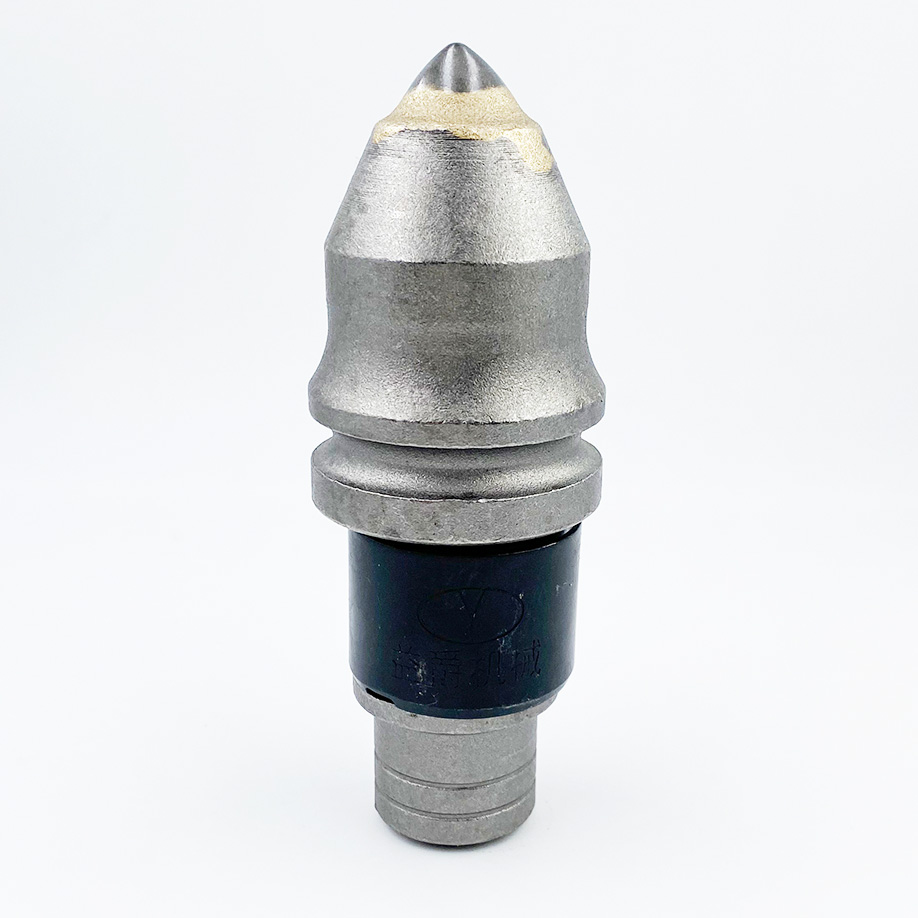
Rock Layer Classification and Hardness-Based Bullet Teeth Selection
Measuring Rock Hardness in MPa and Geological Layer Profiles from Soft Clay to Hard Rock 60 MPa
Subsurface profiling begins with measuring rock hardness in megapascals (MPa). MPa serves as a predictive indicator of bullet teeth's performance. Fast penetration is achievable with soft clay and silt layers (0-5 MPa) using standard conical tungsten carbide tipped teeth. Weathered rock layers (10-30 MPa), such as decomposed granite and fractured sandstone, require carbide layers, reinforcement, and taper to minimize chipping and wear. Solid limestone layers (40-60 MPa) require carbide tips to be ultra-dense with a profile that is flattened in order to achieve maximum sustained edge retention. Augmenting (60) MPa hard rock layers that are predominantly comprised of tough granite, basalt, and quartzite, employs a combination of stepped-diameter designs and shanks. Field mapping of subsurface layers uses Cone Penetration Testing (CPT), a standard field method for measuring real time slab hardness gradients that directly correlates to the selection of bullet teeth.
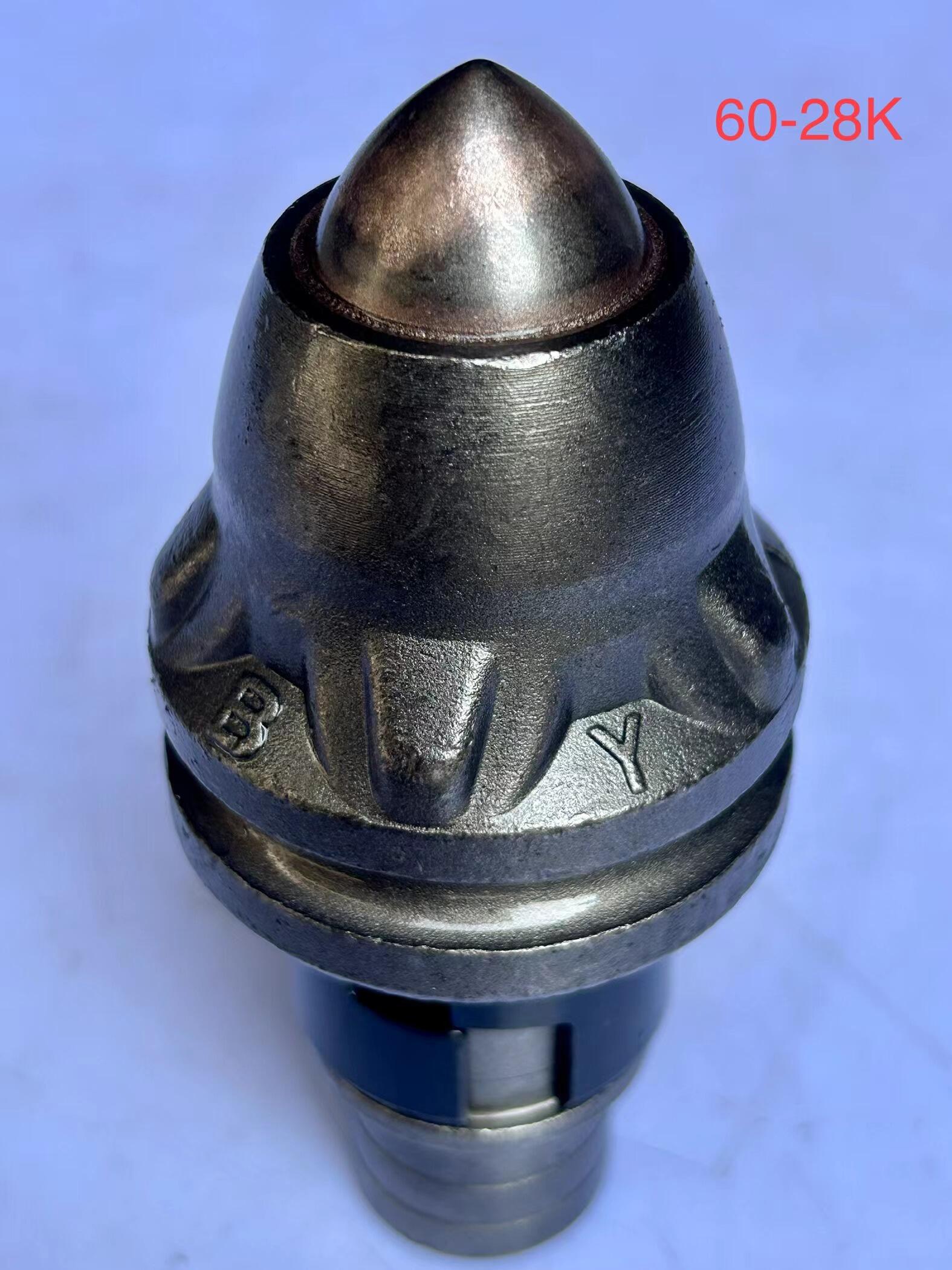
Soil–Rock Transition Zones: Critical Wear Triggers and Bullet Teeth Failure Modes
Soil–rock transition zones are the singularly highest risk environments for the failure of bullet teeth—making up 60% of all premature replacements observed in ongoing operations (Field Engineering Reports 2023). These boundaries cause asymmetric loads that result in three modes of failure:
Tip spalling, which occurs when rock edges that are masked by soil and gravel cause spalling in carbide edges of bullet teeth during soil penetration;
Shank bending, which occurs when gravel–bedrock joint boundaries exert lateral forces onto a shank that exceeds the yield strength of the steel shank;
Accelerated sharp nicks, which occurs when silica crystals impact the edges of the carbide tips
The only feasible optimization adopted for the impact toughness vs. hardness trade-off has been a design which utilizes ductile alloys for shank and functionally graded carbides for the carbide. Also, early detection has proven to be critical: spikes in torque fluctuations and elevated vibrations indicate an imminent failure.
Bullet Teeth Material Research: Attaining the Compromise between Impact Toughness and Resistance to Wear
The Impact of the Tip Geometry Composition of Tungsten Carbide on Performance of Tip Wear across Layers
The relationships between architecture, smart materials and tungsten carbide, which are ultrafine, are important to the use of Bullet Teeth in use in areas of differing geology compared to the importance of just that of hardness. Ultrafine tungsten carbide of grades less than 0.8 µm grain size cemented carbide provides 20% of the resistance of fracture and added impact strength when compared to competing grades. Sophisticated flute architectures, which include helical and multi-land profiles, further enhance the distribution of stress across the layers of alternating soft vs. hard materials, reducing the rate of wear and increasing the longevity of the tool. Examples of these are in the field:
The carbide-tipped designs can take 3-5 times more of the carbide-tipped designs as opposed to non-carbide designs before they have a loss in functional cutting;
The designs that are fluted found a 40% reduction in the frequency of replacement in intermediate layers where the boundaries between the layers are not clearly defined.
The negative impact of high hardness only on the service lifetime of Bullet Teeth in the mixed-layer and fractured Geology
Achieving a high level of hardness, especially with the use of cobalt and nanocarbon, can be detrimental in complex combinations of formations. While the increased wear resistance is beneficial in the case of sandstones, the negative effects on operation can be observed in the case of quartzite and other combinations of geology including gravel and limestone that are fractured and layered. The high impact wear resistance alloys that are over 1400 HV have brittleness that contributes to the rapid progression of the micro-cracks and ultimately to the following two modes of failure:
Rapid extrusion of collision micro-defects that have become macro-defects due to the impact;
Habitual loss of the sharp edge at the carbide-steel interface due to cyclic stress.
Therefore the roughness from the high-hard alloys is reduced to only 35% in mixed layer conditions compared to the traditional balances of toughness and hardness in 1100-1300 HV designs.
Performance-Driven Bullet Teeth Matching: BKH/BTK vs. Conical Series by Rock Layer
B47K17.5, B47K19, B47K22H, and C31HD: penetration rate, stability, and lifespan across 30-80 Mpa formations
Choosing between BKH/BTK and conical series requires assessment of the formation’s hardness and structural uniformity:
B47K17.5 (1.1 kg) provides excellent results in 30-50 Mpa formations (shale, medium density sandstone) with low penetration rates and no significant stability loss;
B47K19 (1.2 kg) provides significant durability in formations (weathered solid and solid) of up to 60 Mpa, using added mass to absorb the shock at those interfaces;
B47K22H (1.25 kg) is designed to work in dense, low grade metamorphic formations (60-80 Mpa) with no significant loss of penetration speed and marked significant loss of resistance to impact and replacement cycles;
C31HD (0.5 kg) excels in rapid penetration of sub-30 MPa formations of gravel, permafrost, or highly fractured overburden, but has significant loss of lifespan beyond 30 MPa formations with simplified geometry.
In mixed geology formations, the greatest return on investment is achieved with C31HD in Soil and B47K in hard rock formations, where formation continuity is preserved by minimal downtime and no loss of structural integrity, particularly horizontal.
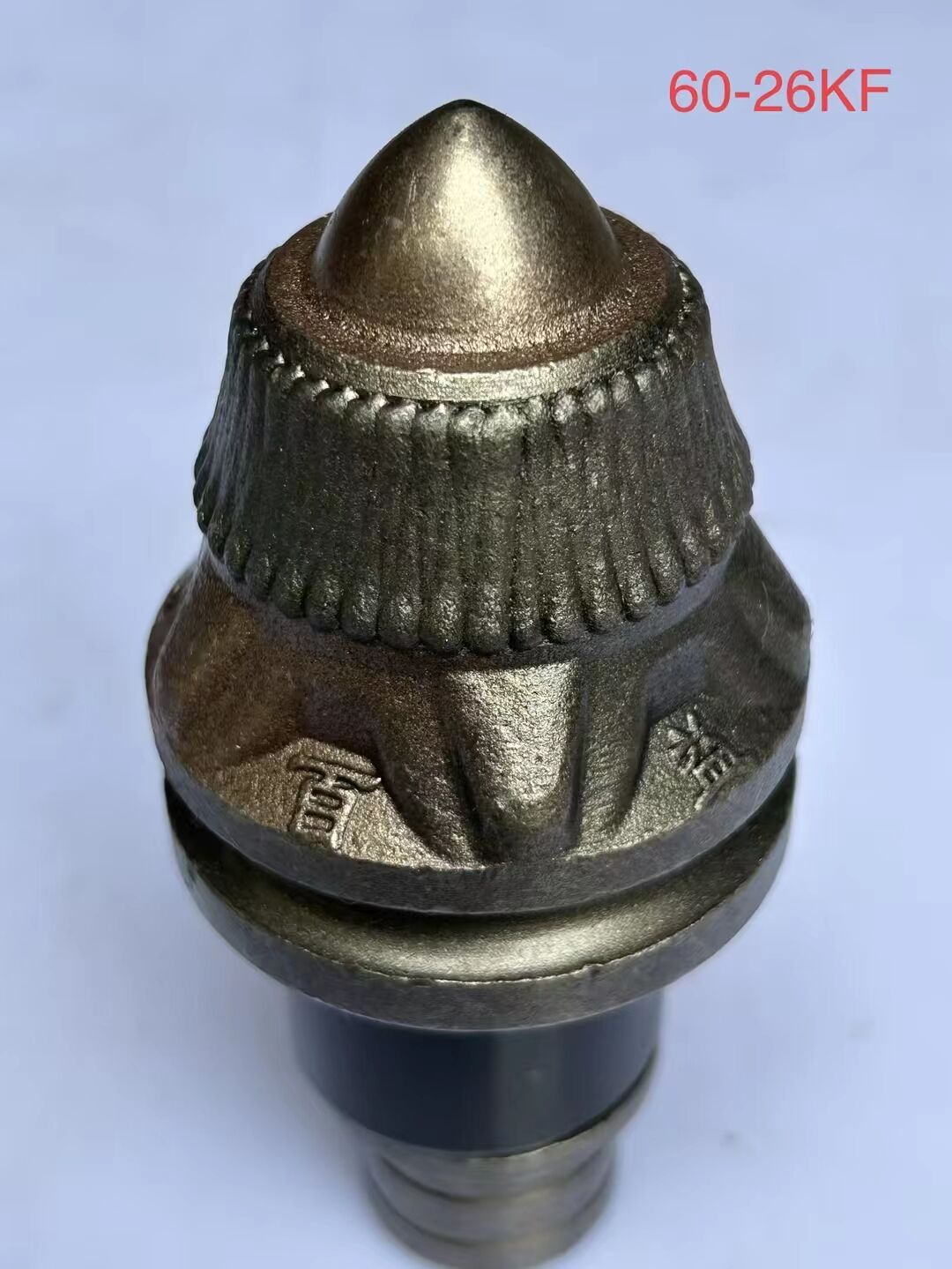
Drilling Parameters and Adaptation of Bullet Teeth to Actual Conditions
Deep drilling technology requires revolving drilling heads. Due to high resistance and a tough drilling environment (hardened rocky layers), drilling heads need to be adapted to conditions. It requires rotating heads (20-50 RPM), axial loads (5-15 tons), and penetrative pressure (0.01-0.05 m/min) focused on drilling heads. As a result of these studies, premature wear of heads was reduced by 34% compared to standard heads (Geotechnical Engineering Journal 2023). Unpredicted changes in head resistance require prompt adjustment of parameters to prevent face fractures and other structural failures. Continuous application of fixed parameters requires the heads to be replaced 200% more when compared to a method of using sensors. Control and adjustment of drilling head parameters to conditions of the meant requires less of theoretically developed resistance to head changes and more of integration. For example, embedding strain gauging, acoustic emission monitoring systems, and control parameters into a drill head.
FAQ
What is MPa in the context of measuring resistance to deformation in rocks?
MPa (megapascals) is the unit of resistance to the testing phenomenon of deformation (rock hardness). It is used to measure the performance of bullet heads.
Why is there a greater risk involved in the soil–rock transitional areas being occupied by bullet heads?
In those areas, there is sudden and uneven loading which is a probable cause of failure in heads leading to fractures, shank bends, and the need to replace drilling heads.
What is the additional function of using tungsten carbide in the testing of bullet heads?
In conjunction with the head's specific designs structural graphite, tungsten carbide (which is a wear resistant and tough) improves the performance, fairness, and penetrative pressure of the head in fabrics.
Adaptive drilling parameters help conserves bit teeth durability by helping limit overheating and excessive wear and tear.