EN
EN

How Soil Layer Properties Affect Buckets' Performance
Resistance, cohesion, and abrasiveness dictate performance of soil.
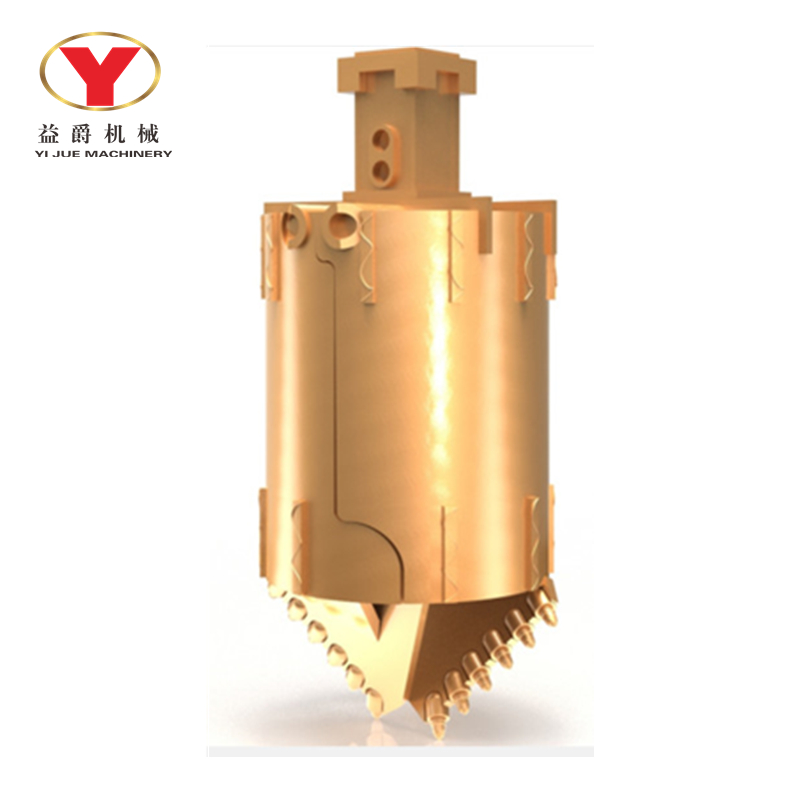
Soil properties dictate the effectiveness of drilling buckets as governed by three factors. Resistance to penetration, cohesive strength, and abrasive potential all factor into the performance of the bucket. Clays which are highly cohesive tend to exert suction forces of greater than 15 kPa. This results in the need for buckets to have wide cutting edges which are open at the bottom as well as having optimized ejection systems in order to avoid adhesion and jamming. Layers which have abundant abrasiveness from minerals in the granite or quartz type will significantly shorten the performance of the bucket by as much as 40-60%. This is in relation to quartz vs. silt and will require the buckets to have teeth which are tungsten-carbide and to also have the wear areas significantly reinforced. Resistance increases non-linearly with density. If gravel is compacted, the down force required is as much as three times as that of loose sand. If the correct bucket is selected based on those properties, stalling of the drill string can be reduced by approximately 78% based on geotechnical field studies conducted in 2023. Certain properties take precedence in design.
Soil Classification (USCS/AASHTO) to Identify The Most Suitable Drilling Bucket
The USCS and AASHTO describe the most appropriate configuration for subsurface conditions. Cohesive CL/CH clays respond to open-bottom buckets with wide and low-tapered edges to avoid upward suction active buoyancy and stabilize the sides of the hole. Non-cohesive SW/SP sands require bucketing with teeth, while granular soil systems (GP/GM) require gaps (between teeth) of 25–35 mm to allow seepage and avoid clogging. The loss of soil in saturated GL/SC transitions, particularly in water, is stabilized with modular buckets with compensation for hydraulic pressure and sealed lateral joints in art space. Following USCS/AASHTO filing protocols for soil systems results in 30% savings in excavation time, while minimizing the bucket mismatch failure to 92% of the projects.
Identifying Bucket Types Suitable for Particular Soil Layers
Open-bottom buckets for cohesive soft soils (clay, silt)
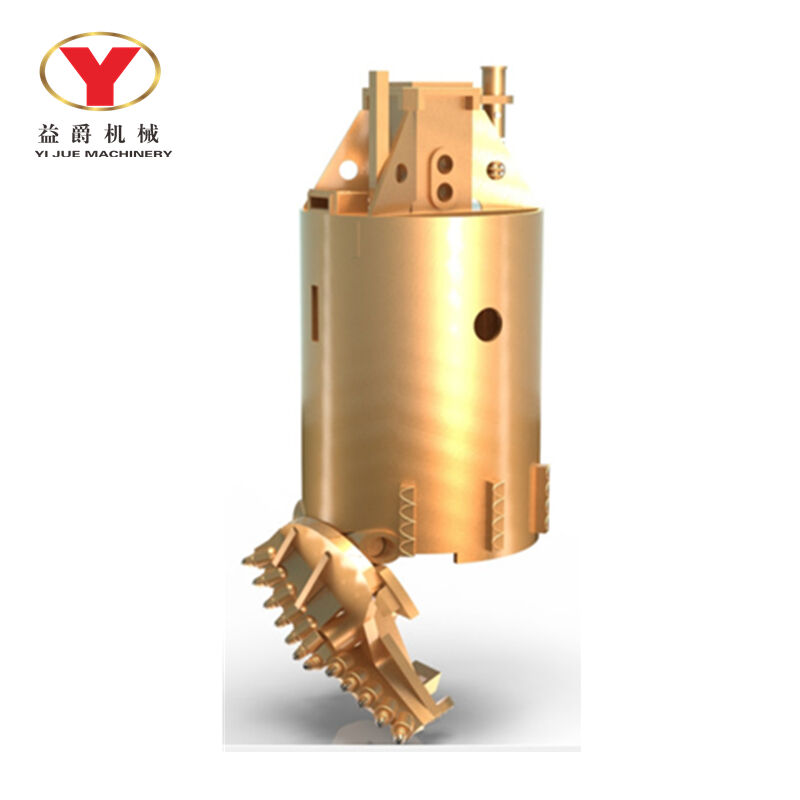
Buckets for cohesive low-density clay and silt layers are open-bottom buckets. The absence of a base allows for the unobstructed flow and drainage of materials. Clogging and collapse of the borehole walls is eliminated, even in soft sediment, where resistance to sealed lids results in suction in the sediment. Soft, low-density clay and silt formations are particularly susceptible to collapse, and the geometry of the mechanical system reduces resistance and aids in the removal of soft materials that favors the collapse of the formations. The data from excavation studies in 2023 confirms a 35% reduction in the occurrence of sealed bucket downtime in cohesive soil compared to other interventions.
Buckets designed for hard rock with high-strength teeth that can withstand abrasive and cemented conditions such as gravel, saprolite, and bedrock.
Gravel, saprolite, and fractured bedrock require extreme mechanical stress engineering. Heavy-duty rock buckets have teeth made from tungsten carbide and wear plates that endure 28 MPa impact forces. Staggered tooth design fracturing cemented matrices and mitigating wear that shortens the life in silica-rich environments. Typical life of the bucket will be increased by 2.8 times. Teeth closeness will also result in minimized rock bridging, which will aid in maximizing penetrating effectiveness in the high-abrasion.
Buckets for mixed and high-water table conditions that are modular and sealing.
High and mixed strata that have high water tables require pressure-balanced buckets with adaptable and responsive engineering. Modular buckets integrate an interchangeable cutting set with sealed hydraulics that equilibrate borehole pressure. Sealed products prevent water ingress and pressure-vaulting vents allow the cuttings to be expelled at a controlled rate. Case studies have shown that modular systems have improved sealing systems to lower water intrusions by 67% (Geotechnical Journal, 2024). Using quick-change adaptations, the system can be configured to sail between cohesive and granular profiles in a matter of minutes.
Critical Features in Drilling Bucket Design Affected by Soil Type
Conical, carbide-tipped, and flat cutter tooth mixers come in different types of materials and have varying geometry which are used for different kinds of soil abrasiveness. Soil mechanics and abrasiveness must be considered for tooth selection. For cohesive clays, flat teeth give maximum shearing, providing a broad shearing area with least adhesion. Conical teeth allow for the focal point of the force to flow in the direction of the tool with a joint cemented or tough rock mineral welfare to improve the consistency of penetration with lower energy input. Carbide tipped teeth are able to provide a service of three to five times longer than standard steel teeth, for the same average due to premature wear costs of $18,000 a week, a direct average from the 2024 drill maintenance benchmarks, at the same average of the rated penetration rates.
Water hole arrangement, opening ratio, and bottom sealing for the best cuttings removal in proportion to layer permeability
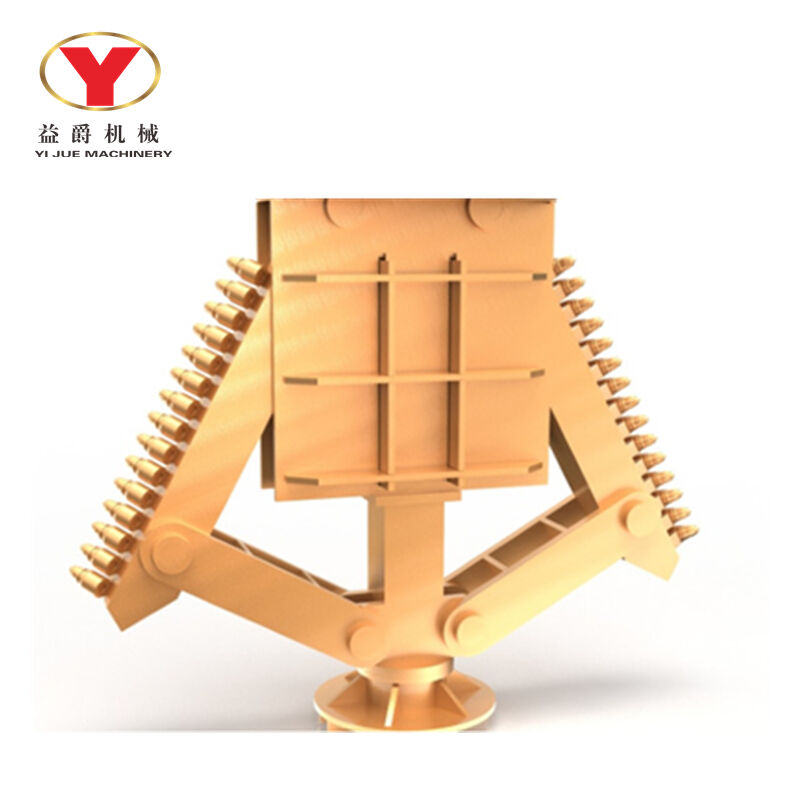
The behavior of soil permeability and pore pressure are the main features in soil removal hydraulics. In sand and gravel with high soil permeability, an average of 70% to 80% opening ratio coupled with drainage water holes enables the prevention of a suction lock. For low permeability soils, closing ratios have to be high, below 50%, to hold the soil cuttings. In situations below the water table, sealing bottom gates are vital to stop the flow of unconsolidated soils when there is pressure from the water. Incorrectly aligned valve mechanism maximum leads to 40% loss of the sample, according to many published geotechnical field studies.
FAQ
What are the considerations for picking a drilling bucket?
Factors include resistance, soil cohesion, and abrasiveness, tooth geometry, cutting edge design, and wear resistance.
Why are soil classification systems such as USCS and AASHTO useful?
They help determine which bucket to choose so that one matches the soil to the maximum extent possible, thus eliminating the mismatch.
What happens when open-bottom buckets are used in cohesive soil?
Cohesive soil doesn’t clog the bucket, and there’s no loss in pressure stability in the soil.
Why do abrasive layers require the use of tungsten-carbide teeth?
They last 2.8 times longer than regular steel teeth.
What are the advantages for mixed environments and high-water conditions when using modular buckets?
They can be adjusted depending on the soil, and the cutting assemblies can be adapted to seal and control the pressure depending on the situation.