EN
EN

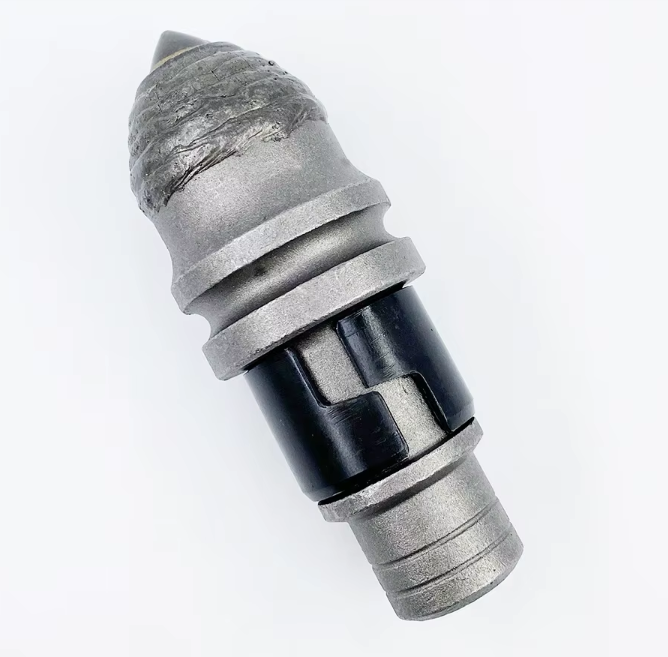
Identifying Rock Layer Properties: UCS, Abrasiveness and Formation Behavior
Relating UCS and Cerchar Abrasiveness to Bullet Teeth Performance Limits
UCS defines the energy level required to penetrate rock. Formations greater than 200 MPa need specially designed tooth geometry to prevent rock failure. The Cerchar Abrasiveness Index (Cerchar ABR) defines the abrasive nature of rock. Formations having quartz content and ABR greater than 4 can cause 300% greater wear of carbide than soft shales. The following performance limits have been established using data collected from the field:
UCS < 50 MPa: Regular conical teeth provide effective chip formation
UCS 50 – 150 MPa: Carbide tips are reinforced to endure compressive fractures
UCS 150 MPa: Advanced alloys are required to provide resistance to microspalling
These properties are mechanical and limit the selection of teeth. Teeth that are not correctly matched will cause a wear rate of 70% and will be greatly reduced (Tunneling Journal, 2023).
Differentiating mechanisms of wear in shale, quartzite, gravel and frozen soil layers
There are multiple geological formations that have their own methods of wear:
Formation Wear Mechanism Effect on the Teeth
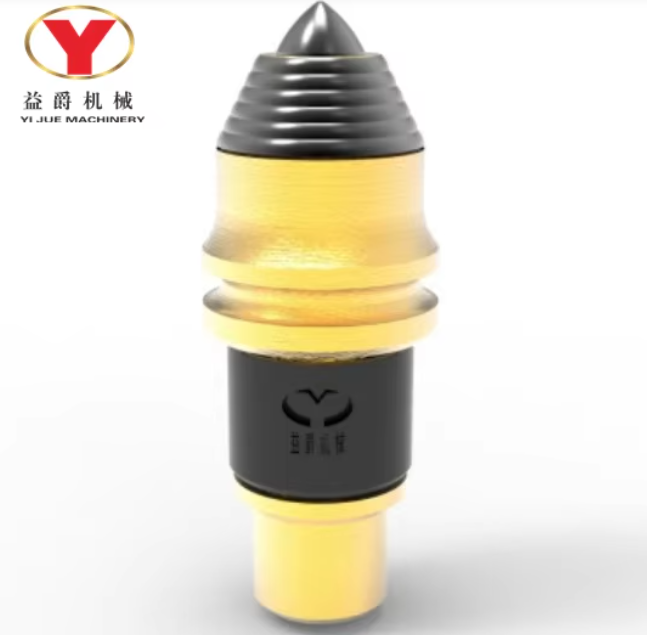
Shale Adhesive wear of abrasives Carbide tips become rounded
Quartzite Micro-cutting abrasives Fracture of tooth edges and grooves
Gravel Impact fragmentation Fracture of tooth edges
Frozen Soil Mechanism of Thermal Fatigue Fractures due to Abrasion at -20°C
Abrasion that is of a micro-cutting nature in quartzite and impact fragmentation in gravel follow impact wear of a coarse nature. Frozen soil has a complex mechanism because of the ice freezes a mixed soil and carries an impact abrasiveness that is a coarse mechanical nature. It is important to recognize these mechanisms, especially in transitional zones where wear patterns hybridize and can increase the failure risk.
Bullet Teeth Selection by Geometry and Material Composition
Conical, BKH, and BTK series: Bullet teeth geometry relative to rock behavior when fractured and the rock loading
Geometry gets linked into the behavior of the rock when fractured. When teeth are conical, they concentrate a fracture, which is why they work best in fracturing rock when the rock is a brittle single solid mass like shale. This is where they are best to control the propagation of fractures. In the case of interbedded layers of quartzite-shale, teeth from the BTK series with a flared base provide better load distribution across larger contact surfaces and lower the point loading stresses by as much as 40% in the field studies. BKH geometries are designed to optimize chip removal with an asymmetric cutting edge and achieved 18%-22% faster penetration in highly abrasive strata. When the rock is uniform, conical teeth work best, and when the rock is layered with varying degrees of lateral loading, the BTK design teeth hold 92% cutting efficiency.
Tungsten carbide vs. carbide-tipped vs. alloy steel: Evaluating wear resistance and impact toughness for different ground conditions
Choosing a material involves walking a tightrope to carry a balance between wear resistance and impact toughness.
Material Type Best For Wear Resistance Impact Toughness Limitations
Tungsten carbide is the most durable in abrasive rock, providing a 3.2× service life in silica-rich formations. However, its brittleness is a concern in dynamic loading environments. Alloy steel is the most effective in fractured, unstable rock with excellent shock absorption, but has a 70% wear rate in abrasive conditions. According to ASTM F2670 excavation tool testing, carbide-tipped teeth provide the best compromise by providing 85% of the wear resistance of Tungsten carbide while providing 200% greater shock absorption. In frozen soil, these tips reduce ice adhesion by 30%, maintaining the ability to remain sharp at subzero temperatures.
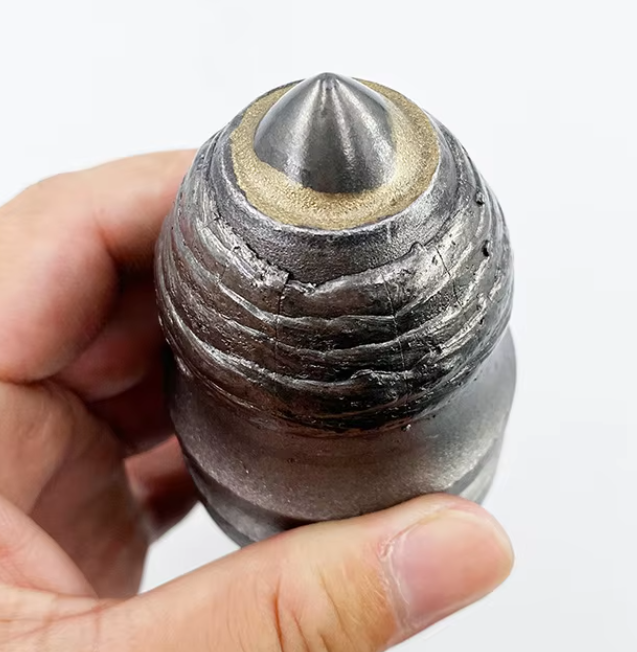
Field-Validated Bullet Teeth Matching: From Geological Mapping to Operational Performance
SPT-N, CPT-qc, and bore logging data become crucial when choosing bullet teeth
Effective bullet teeth selection boils down to standardized geotechnical data. The Standard Penetration Test (SPT-N value) quantifies the resistance of soil; the Cone Penetration Test (CPT-qc) quantifies resistance in cohesive layers at the tip, and borehole logging confirms which type of rock is present and the density at which it fractures. Together these enable a predictive model for wear and impact loading allowing accurate evidence based selection rather than trial-and-error deployment in heterogeneous strata.
Case evidence: 220% extended service life with BTK-47K bullet teeth in quartzite–shale interbeds across 12 highway projects.
Operational validation provides evidence of real-world effects of data-informed matching. In 12 highway projects that crossed quartzite–shale interbed formations, BTK-47K bullet teeth outperformed other alternatives with a 220% increase of service life. This increase was a result of the correct carbide grade selection in conjunction with measured Cerchar ABR values and geometric optimization of layer transitions. The result of many projects at varied sites indicates the reliability and broad application of selection models based on regional geology.
FAQ
What is Unconfined Compressive Strength (UCS)?
Unconfined Compressive Strength is a measure of how much compression a rock can endure without confinement. It is essential to consider UCS to determine the proper bullet teeth for penetration.
What is the Cerchar Abrasiveness Index (Cerchar ABR)?
Cerchar ABR is a measure of the abrasiveness of rock formations. It gives insight into the potential wear of carbide tips. Quartz-rich rocks typically have higher ABR (4) and consequently a higher risk to wear.
What is the range of geometries of bullet teeth?
The bullet teeth's geometry of conical, BTK-series, or BKH-series is tailor made to formations. Conical teeth are designed for brittle rocks; BTK is designed for layered formations, while BKH is best for penetrating more abrasive strata.
What materials are used in bullet teeth?
Bullet teeth are made of tungsten carbide, carbide tipped compositions, or alloy steel. Each material provides a different advantage of wear resistance balanced against impact.
How are bullet teeth selected based on geotechnical data?
SPT-N values and CPT-qc complementary data along with borehole logging are evaluated to predict the types of wear-the-rock will expose teeth to by defining the level of impact energy. This data drives the optimal tooth select.