EN
EN

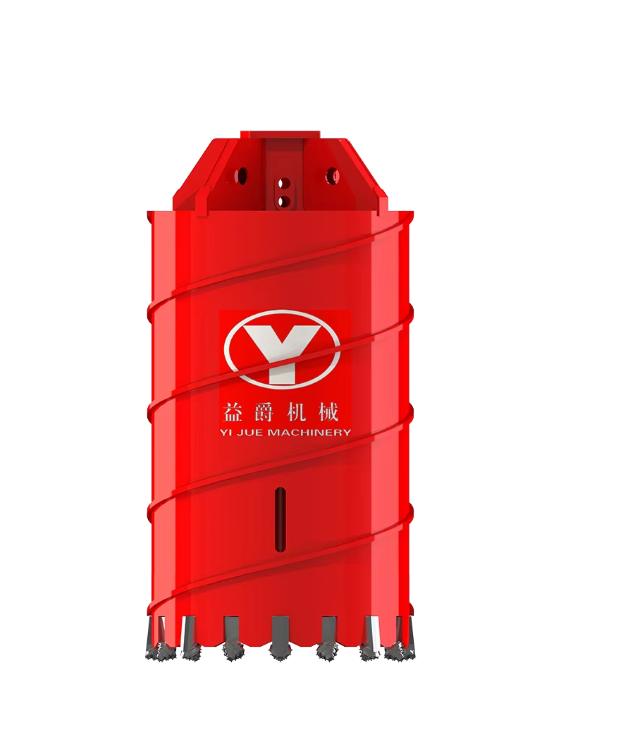
Selection of Materials and Core Barrel Wear Resistance
Wear from Core Barrel Resins and Fillers
During processing, glass fiber infusion will “sand” the inner surface of the core barrel. Even low levels of glass fiber (< 0.2% total weight) will generate significant frictional wear (up to 100% compared to resins without glass fiber) and mechanical degradation to the barrels. The rate of volumetric deterioration correlates with the fiber content as well as the density of the glass fiber. Frequent maintenance is required if the average diameter of the core barrel exceeds 0.2 mm over its tolerable limit. Core barrel resins and fillers also harm the melt spiral of other barrels in a modular design.
Wear from Core Barrel Fillers and Moisture
The flame retardants and stabilizers also amplify the core barrel dilatation. Halogen-based flame retardants in their polymers (Nylon, PVC, and ABS) act as pitting corrosion inducing agents to the core barrel. As a damp resin flows, the core barrel’s surface protective layer is consumed. Focused industry experiences show that these compounds reduce core barrel service life by 0.4 years (40%) compared to Hall's and Invicon. The materials of choice (selection) for PVC and ABS-based Flame Retardants and core barrel Nylons are Nickel-based Superalloys.
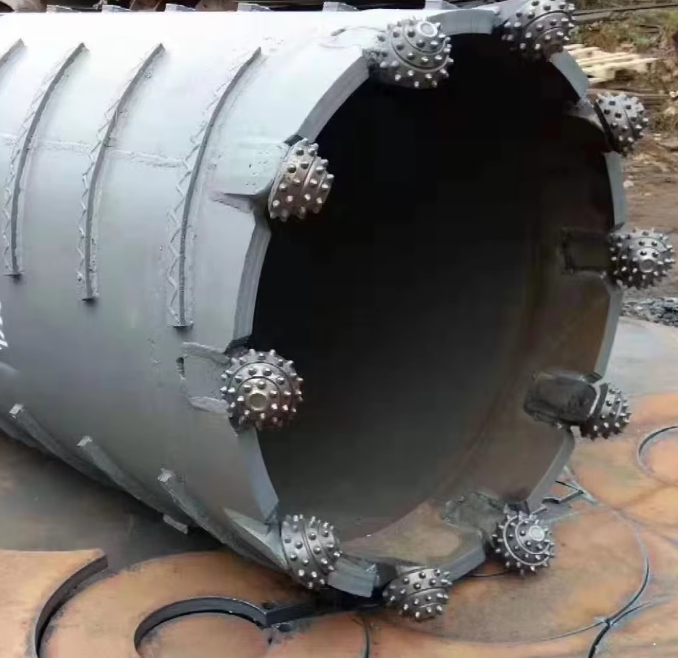
Analysis of HSS, Carbide-Coated, and Ni-Based Alloy Core Barrels in Industrial Applications
Materials Wear Resistance Corrosion Resistance Cost-Effectiveness
HSS barrels offer a low deficiency cost, but degradation occurs early due to the resins that fill the barrels, with a replacement cost of 12 to 18 months. Carbide-coated barrels have a service life that is 2 to 3 times longer than HSS barrels in applications that are resin filled. However, Carbide-coated barrels can lose the coating in highly acidic environments. Nickel chromium alloys can stay dimensionally stable for over 30,000 hours of processing hostile environments with little to no degradation. All of this while considering the type of resin and what is a reasonable amount of loss to corrosion during the chemical attack.
Core Barrel Failures — The Main Drivers of Fracture of the Core Barrels
Thermal and Mechanical Actions - Assessing the feed pressure, temperature, and screw speed to explain core barrel failure
Core barrel fatigue and degradation can be assessed by combining temperature, mechanical actions, and feed pressure. Mechanical actions such as a feed pressure above the recommended levels can result in plastic deformation. Studies industrial drilling show that each 100 PSI above the safe feed pressure limits can reduce core barrel service life by 12 to 18%, with the exact number of service life directly proportional to the hardness of the base alloy. Continuous operation above 140°F also further degrades the barrel by softening the barrel material. An increase in feed screw speed also raises the shear and elevates the barrel pressure. Significant feed screw speed adjustments of just 20% can shorten core barrel service life by 30% percent. All these actions also occur in a synergistic manner such that small changes in one of the parameters can lead to a doubling or halving of the servicing core barrel replacement life.
Microstructural development under constant load: Connecting operating history with core barrel lifespan
Constant operating loads cause microstructural changes to be permanent in the alloys used in core barrel production. Continuous thermal-mechanical cycling leads to the congregation of dislocations, coarsening of carbides, and facilitating of grain boundary sliding, all of which decreases fracture toughness. During a normal service time of 5,000 hours, the surface hardness can decrease by 8–12%, and micro-voids appear and combine to form micro-cracks in the subsurface. These effects are not reversible. Barrels that experience 3 years of high-feed-pressure duty will have lower fatigue resistance compared to barrels that experienced gentle loads. Field studies have shown that barrels with greater than 10,000 hours of mixed load usage will have a 40% greater chance of a catastrophic failure unless the rated load is decreased or the barrels are replaced. Monitoring the total accumulation of thermal time over 120°F and the total revolutions of the screw provides a good estimate of remaining service life and allows for maintenance to be performed to restore the functionality of the system before failure occurs.
Accumulation of design features that prolong the life of core barrels
Precision geometric features for surface finishes, flight clearance, and the effects of shear localization on the root diameter
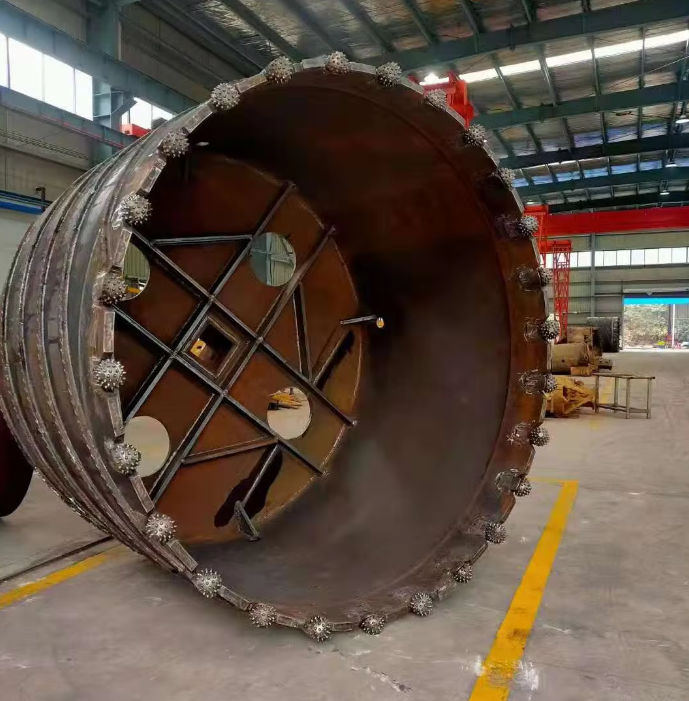
Precision geometric features control the distribution of stress and the rate of wear. A surface finish of Ra surface finish of 0.4µm reduces the friction-induced adhesive wear by 40% compared to the surface finish produced by a rough machine process. An optimal flight clearance of 0.1–0.3 mm prevents the accumulation of resin that intensifies the rate of abrasive erosion. Maintaining the root diameter ratio of 1.5:1 to 1.7:1 (barrel to drill) minimizes the concentration of torsional stress; lower ratios increase the risk of a torsional fracture by 28%, based on widely accepted models of drilling mechanics.
Parameter Optimal Range Wear Reduction Failure Mechanism Addressed
Surface Finish (Ra) ≤ 0.4μm 40% Adhesive wear
Flight Clearance 0.1-0.3mm 35% Material buildup erosion
Root Diameter Ratio 1.5-1.7:1 28% Torsional fracture
Synergistic optimization of these parameters extends service life by 200–400 operational hours in demanding formations. Computational modeling confirms uniform shear force distribution delays crack initiation by 60% compared to standard configurations.
Proactive Maintenance and Smart Monitoring for Core Barrel Life Optimization
Best-practice storage, cleaning, and handling to guard against latent corrosion, and drift, in core barrel
Even premium-grade core barrels suffer premature degradation if mishandled. Ambient humidity and airborne chlorides initiate pitting corrosion on precision-ground inner surfaces, while residual resin deposits promote a galvanic attack. To mitigate this, core barrels are stored with as many openings as possible sealed and a light coat of vapor-phase corrosion inhibitor applied in a controlled environment (40–60% RH). Cleaning must follow a solvent-based protocol that fully dissolves cured polymer without etching the alloy, as abrasive brushes or alkaline cleaners alter surface finish by 0.5–2 µm, increase friction, and accelerate corrosion. Conduct bore gauge inspections (±0.01 mm tolerance) every 500 operating hours to detect early wear patterns before they compromise flight clearance. Implementing these practices will reduce unplanned core barrel replacements by up to 30%.
IoT-based predictive monitoring: Core barrel life estimates based on real time strain, temperature and vibration analyses.
Reactive replacement after visible failure leads to detrimental cost and operational disruption. A better solution deploys an embedded IoT sensor network to assess the three main indicators leading to core barrel failure: strain, temperature and vibration. Strain gauges measure elastic deformation in excess of 0.15%, identified as an indicator of incipient fatigue. Thermocouples arrange at 120° intervals and measure ΔT. When the temperature cross-sectional difference of 15°C occurs, zone temperature softening and corrosion may mesh. Vibration accelerometers align to ISO 10816 and measure 4.5mm/s. All of the above monitor continuous predictive algorithms highlighting trends and correlating failure modes to real time assessments of remaining useful life. Field testing showed improvements of 40–60% service interval increases and 80% decreases in emergency downtime. The goods provided in the first year return the investment.
FAQ
What are the leading causes of core barrel degradation?
the leading causes are abrasive degradation from the glass, mineral fillers, and others, corrosive degradation from the additives and moisture, and thermal-mechanical degradation from the operational modes.
What are the best parameters to extend core barrel life?
Longer life of core barrels is achieved from optimal geometry parameters, effective storage and washing practices, and anticipatory maintenance enabled by IoT-based predictive monitoring.
What material is best for specific polymer processing applications?
For high corrosion resistance and abrasive polymer processing nickel based alloys are ideal while Polymer HSS or carbide-coated may fit less demanding and budget oriented situations.
What is the value of IoT sensors in monitoring core barrels?
With IoT sensors, you can track strain, temperature, and vibrations as they happen, making it possible to build algorithms to predict the remaining useful life of the equipment and avoid unexpected downtime.