EN
EN

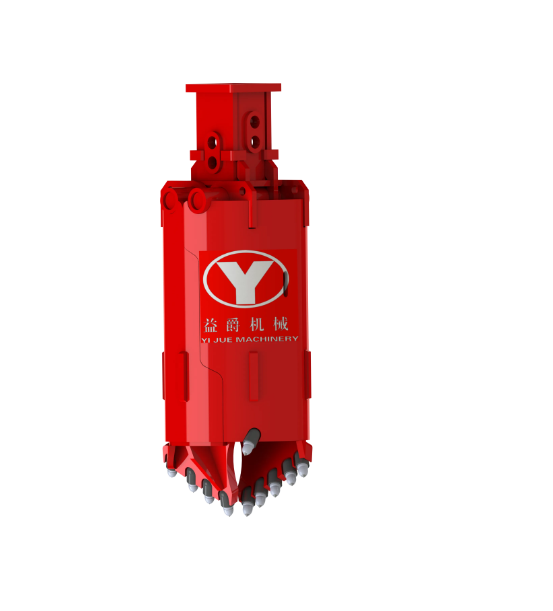
Soil Layer Properties and Bucket Selection for Drilling
Soil layers each have their own mechanical properties, which impact the efficiency of the drill and wear the bucket. Clay, sand, gravel, and weathered rock each have different shear strengths and abrasiveness and vary in cohesive properties. These factors determine how a bucket interacts with the soil layers during the cutting process and how the bucket retains and discharges the soil. Clay has high shear strength and high cohesion. Therefore, the bucket needs thick plates. Gravel is highly abrasive, and soft rock will wear a bucket. Weathered rock needs a design that will bear impacts and can cut through rock. These buckets need to be standardized in the regions where they will be used because of the highly variable properties of soil. In one example, the properties of the soil may shift from soft sand to highly consolidated weathered rock. This can cause high torque, slowed cutting, and accelerated wear on the drill. Data collected from 2022 to 2023 on North American piling projects reveal that if these properties are ignored, the total drilling costs are increased by around 40%, due to the bucket failing and prolonging the drilling process.
Type of Soil Shear Strength Abrasiveness Cohesion Recommended Bucket Adaptation
Clay High Low High Reinforced side plates
Sand Low Moderate Low Wide opening ratio
Gravel Moderate High None Heavy-duty teeth
Weathered Rock Very High Very High Variable Specialized cutter design
Adapting Drilling Bucket Design for Soil vs. Rock Formations
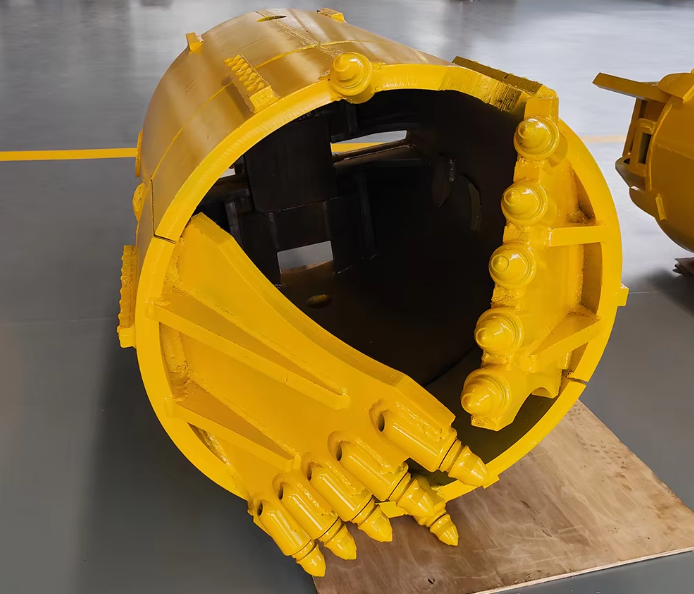
Certain high-resistance and abrasive layers require particular tooth design/geometry, side plate reinforcement, and opening ratio.
Tooth design /geometry and an opening ratio of the bucket play a strong role in determining the type of soil a bucket can handle. Bucket teeth that are broad and closely spaced allow for continuous shearing for cohesive soil. For soil that has a hard and fractured rock, bucket teeth need to be pointed and placed with a spread. Reinforcement of side plates and opening ratio need to be considered. Side plates make up the sides of the bucket and the opening ratio of the bucket play a role as to the bucket's capability. A reduction (15-20%) of the opening ratio increases the capacity of the bucket for coarse, fractured and hard soil, but slows the discharge of materials, while an increase (25-35%) of the opening ratio improves the flow of finer and less cohesive soil. Using one design of bucket across clay and hard rock transitions causes a decrease of around 40% in the desired penetration of soil in this experiment and highlights the need to have a design adapted for specific purposes.
Material specifications highlight the importance alloy steel grades and heat treatment advancements have on the service life of extended buckets.
The longevity of steel is dependent on both the treatment and the processing. For abrasive rock conditions, alloy steels such as 30CrMo or 40CrNiMo, heat treated to 1,000 MPa or more, are typically used. Induction or flame surface hardening increases tooth tip and side plate hardness to 48–52 HRC, which allows for improvement of wear resistance against granite or quartzite. Conversely, clay or sand predominantly buckets might use the cheaper 20Mn steel with a basic quench. This achieves inexpensive toughness and avoids using excessive resources. It is important to note that the use of double cut rock buckets requires the stress-relief annealing after welding to eliminate the risk of cracks that are caused during the manufacturing process. The American Society for Testing and Materials (ASTM) A615/A615M and ISO 6892-1 provide standards for the minimal testing of the mechanical properties of these materials, and adherence allows consistency for the production batches. Without the proper alignment of heat treatment and the material constructs to the formation conditions, the service life of the buckets is reduced by ~50% against unanticipated rock lenses. This leads to increased maintenance and replacement costs during the unplanned downtimes of the rock formation.
Adaptive Bucket Deployment to Maximize Drilling Efficiency
Application Evidence: Signs of RPM/Torque Degradation: When Bucks Should be Switched During a Bore
There are many ways performance degradation can signal a mismatch between the soil and the bucket being used. A loss in sustained RPM of 15% or more below the norm, torque oscillation of ±25% of the nominal shift, and the presence of unusual harmonic vibrations are all signs of ineffective mechanics caused by soil transitions. These measurements and observations are able to be collected by distinctly original equipment manufacturer (OEM) integrated systems, like Bauer BG Series telemetry and Casagrande SmartDrill. With these systems, the operators are able to switch buckets to avoid damages. Based on the 2023 International Foundation Contractors Association (IFCA) Operations Benchmark Report, the changes allowed by real time loss of performance data allow for changes in less than 30 minutes. Using this data and technology has accomplished a decrease of 36% in average downtime. Appropriate alignment of tools keeps the rate of penetration to within ±5% of the goal, and the rate of penetration helps improve the rate of overall equipment usage by 18% to 34%.
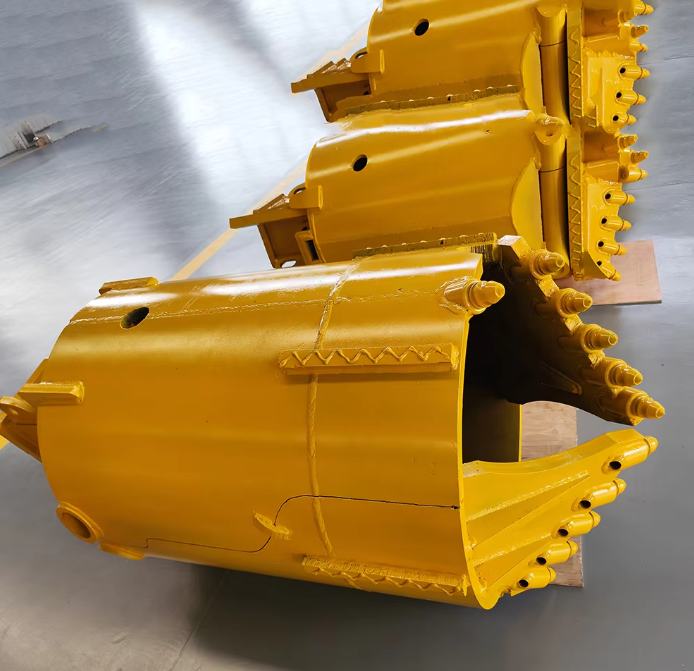
Integrating geotechnical logs and real-time data to efficiently organize drilling bucket orders
Top contractors use a combination of interpretable geotechnical logs (CPTu profiles, SPT N-values, and tested shear strength lab values) and real-time data from drills to develop predictive bucket orders. Predictive bucket orders work by sequencing drilling buckets to match the geotechnical data boundaries of the drilling strata (e.g., clay scoops followed by gravel cutters, then rock augers). The contractors using predictive bucket orders report a decrease of 27% in the need for rework and a decrease of 32% in the need for changing drilling tools during drilling. Predictive bucket orders have also improved the ability to keep boreholes within an acceptable deviation of 2 mm-30m and are compliant with various infrastructure construction requirements like ASTM D1586 and EN 1997-2. Predictive bucket orders change mid-drilling tool and bucket planning from a reactive process to a planned data-focused process
FAQ
Q. Why are the properties of soil a concern during the selection of a drilling bucket?
A. Performance and damage of a drilling bucket are affected by soil shear strength, abrasiveness, and cohesiveness. The appropriate bucket design and soil type reduces damage to the bucket and improves performance.
Q. What are the effects of abrupt changes in soil type?
A. Abrupt changes in soil type can cause increased resistance to penetration of a drilling bucket and increased wear to a drilling bucket as a result of a higher torque being required. This increases the need for rework and the cost of the project.
Q. What factors go into a drilling bucket design to make it more durable?
A. In order to make a drilling bucket design more durable, it is important to consider side plate reinforcement, the ratio of openings, alloy steel grades, tooth geometry, and heat treatment. These factors should be matched to the conditions of soil and rock.
Q: What do operators do to identify bucket misalignment when drilling?
A: Mismatched buckets can be indicated by consistent loss of RPMs, exhibiting torque surges, and abnormal drilling vibrations. These indicators require immediate actions to alleviate disruption and limit system downtimes.
Q: How does merging geotechnical logs with real-time monitoring help?
A: The integration of geotechnical logs with real-time data helps define the best position of buckets while limiting subsequent drilling realignments. This integration ultimately enhances efficiency when moving through diverse strata of soil.