EN
EN

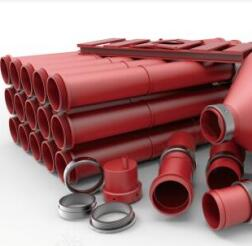
Casing Pipe Protection Against Corrosion and Material Degradation
Detecting Corrosion in Casing Pipes with Nondestructive Testing
Nondestructive testing (NDT) facilitates the detection of corrosion in casing pipes with speed and precision, and with the structural integrity of the casing pipes remaining intact. Wall thinning corrosion is detected using ultrasonic thickness measuring. NDT techniques can detect wall thinning with a depth of ~0.1 mm and then measure the depth. Whole pipe length scans are made in order to detect pit corrosion and cracks by disruptions caused in the pipe in the presence of a magnetic field using magnetic flux leakage (MFL) detection. Detection of cracks subsurface can be done using phased array ultrasonic testing (PAUT). When combined, these techniques allow detection of critical wall thinning that exceeds a depth of ~10% of the total wall thickness. NDT inspections conducted every six to twelve months track and baseline structural integrity with a ~47% reduction in unplanned shutdowns.
Degradation Mapping and Resistance Evaluation of Sour Service Casing Pipe From H2S and CO2
An assessment of casing pipe resistance to sour service hydrogen sulfide (H2S) and carbon dioxide (CO2) is vital. The NACE TM0177 test exposes materials to H2S-saturated solutions under controlled stress to assess the tendency for sulfide stress cracking and the pipe casing’s resistance to H2S. Degradation mapping employs electrochemical impedance spectroscopy coupled with computational models to clarify pipe corrosion maps. This technique provides influential information for threshold determination regarding CO2 partial pressures above approximately 30 psi which promotes sweet corrosion. H2S conduits with ≥ 50% concentrations mean that from material selection matrices, chromium-molybdenum alloys are the preferred materials. The continuous assessment of downhole fluid composition and temperature gradients is important for the comprehensive and timely management of H2 induced cracking and other loss of containment risks.
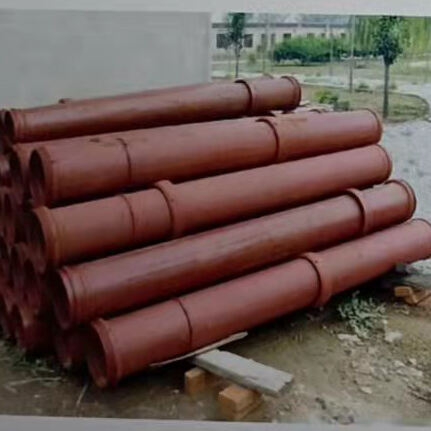
Safety and Reliability of Connection and Threads
API RP 5C1 for Casing Pipe Threads: Lubricant and Torque Specifications
Prevent thread galling and ensure connections are gas-tight through controlled lubrication and torque. Use the API thread lubricant evenly on all threads before make-up, and never deviate from API RP 5C1 torque-turn requirements to counter the risk of overload disconnection (under-torque) or risk of micro-cracks (over-torque). The precision of the torque control is ensured by power tongs that are within a 5% tolerance, the connection withstands downhole pressures above 10,000 psi. For traceability and standardized compliance to regulations, all parameters are to be documented.
Microscopic Thread Damage Assessment and Connection Verification Standards
Every connection must then be verified by hydrostatic testing first at 1.5 times the working pressure. This testing should then be recorded, following API 5CT standards. This method lowers connection failures by 63% in high-stress, high-velocity conditions.
Storage and Handling of Casing Pipe
Protective Measures from the Sun and the Sea
Preservation of the integrity of casing pipe is essential before the pipe is placed into the ground. Hydrophilic polymer should be utilized to set the casing pipe in a vertical position along chemical engineer designed racking units. The polymer further enhances the hydrophilic case by preventing the creation of small rise areas which aid in the corrosion of the casing. Lastly, to block UV damage in your storage case, a UV block enclosed case is critical. This damage occurs in a matter of 30 minutes and often permanent damage occurs to the protective hydrocarbon barrier. To ensure a constant 30 cm gap is maintained in between casing pipe, chemical engineer designed spacer bars should be placed in a horizontal position in the storage case. During storage periods, the nip time is verified by the properly constructed storage case, as constant 30 cm is maintained between casing pipe, preventing the corrosion of the casing. The storage case is also monitored with a digital hygrometer to ensure early stage pitting is maintained at the constant 45 % relative humidity.
Incorporate Protective Coatings With Drilling Fluid Management Solutions
Role of pH - Stabilized Drilling Fluids in Corrosion of Casing Pipes
At a pH of about 10, drilling fluids will maintain a level of solubility for H2S, CO2, and other corrosion inducing dissolved gases, and will subsequently reduce positive corrosion reactions resulting from the presence of dissolved, gassy acids. Alkaline additives will reduce corrossion in metals by 70% in sour environments in which the metal solubility, pH, and corrosion will be maintained. With proper cuttings transport rheology, the chemistry will remain balanced, leading to reduced pitting corrosion and an extended service life of the inner casing pipes, while not impacting the durability of the casing pipes during the drilling operations.

Performance of Epoxy and Fusion-Bonded Epoxy (FBE) Coatings on Casing Pipes in Extreme Conditions
In moderate aggressive climates, an epoxy coating is a great economical option to overcome initial challenges of the chloride barrier of corrosion. For extreme thermal (120°C) and high pressure, sub-sea or geothermal conditions, Fusion-Bonded Epoxy (FBE) is the coating of choice as it possesses the best performance of adhesion, resistance to cathodic disbonding and durability against elrosion and in the field of industry data, it is stated that FBE coated casing pipes used in aggressive geothermal wells were up to 40% better at resisting erosion than standard epoxy while providing over 15 years of service.
FAQ
Non-destructive Testing (NDT) has become an essential testing method for casing pipe systems. What is it and why is it critical for casing pipes?
NDT has a zero or low level impact of structural integrity testing and is essential for identifying initial corrosion of casing pipes.
How does the H2S/CO2 resistance evaluation for casing pipes in such games of sour conditions aid in the selection of the casing pipes to be used in such conditions of sour environments?
This allows for the assessment of casing pipes to be evaluated for corrosion on the whole pipe, and especially on the hydrogen sulfide and carbon dioxide stress corrosion cracking, in such environments.
What are the advantages of applying Fusion-Bonded Epoxy (FBE) coatings?
FBE coatings boast better adhesion, higher resistance to cathodic disbondment, and better longevity in highly stressful conditions of casing pipes.
Why are casing pipes stored properly?
Correct storage retains the soundness of pipes, which safeguards against prematurity corrosion and damage, ensuring that the pipes have extended and dependable service life.