EN
EN

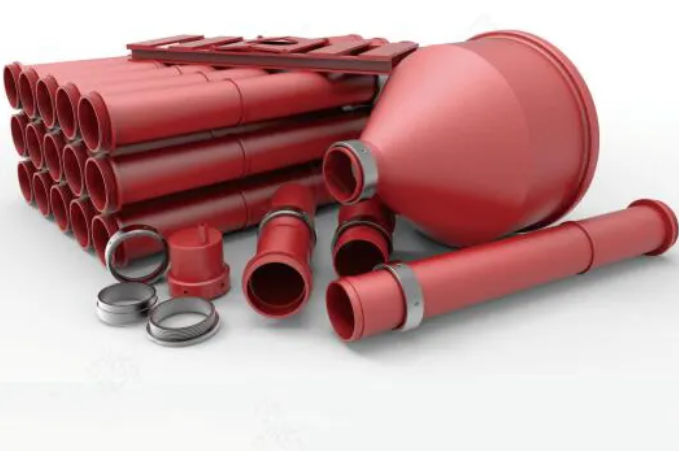
Structural Integrity: Eliminating Weld-Related Failure Risks with Seamless Casing Pipe
Elimination of weld seam vulnerabilities under axial, lateral, and cyclic loading
Seamless casing pipe consists of a solid steel billet with no welded joints. Unlike welded joints, seamless casing pipes stress uniformly around the pipe wall, and fatigue-related fractures are significantly delayed, if not prevented. Fatigue of welded pipes is generally unavoidable and caused by the welds. The presence of a weld also creates a starting point for corrosion, especially in aggressive or saline ground conditions. In critical applications like marine, seismic, and heavy load foundations, the seamless casing design will not deform or fail. The absence of a welded joint eliminates stress concentration, crack initiation points, and localized weaknesses of weld seams. In addition, testing shows that seamless casing pipe withstands up to 20% more internal pressure than equivalent welded grade pipes.
API RP 2A Level 3 Yield Strength and Ductility Compliance and ASTM A252 Grade 3
Structural casing manufactured from seamless pipe rolls consistently complies with the mechanical requirements of both ASTM A252 Grade 3 and API RP 2A Level 3. Due to forging production, the casing pipe rolls yield a minimum yield strength of 45 ksi with excellent ductility of 22 to 25 percent. A ductility of at least 22 percent is required for construction application as pile driving impacts casing pipes, and when a casing pipe is driven, the impact energy is absorbed by the casing pipe through plastic deformation (without rupturing) at the driven end. Welded pipes, on the other hand, exhibit reduced ductility at the heat-affected zone, even after post-weld heat treatment. This impacts the performance of the welded pipe under the same code as seamless casing pipes. The consistent microstructure of seamless pipe ensures that every length meets both yield and elongation specifications. This provides engineers the confidence to analyze and assess bearing capacity and refusal under load.
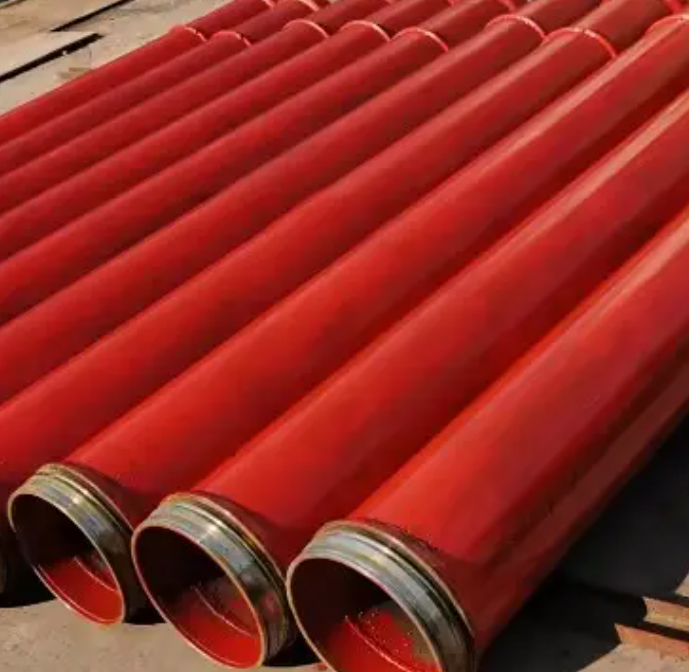
From a materials perspective, the uniform stress distribution due to total contact with surrounding soil enables consistent load transfer, fostering uniform friction even in variable soil conditions.
Seamless casing pipe provides circumferential contact. This is especially needed in variable marine clay. Reliable circumferential contact is possible because, unlike weld seams, the surface integrity and surface stiffness of seamless pipes is consistent. Fulton's Report (2023) validates a 23% increase in the reliability of the frictional coefficient when using seamless pipes in marine clay.
Resistance to Localized Buckling and Stress Concentration in Soils Prone to Liquefaction
The isotropic and weld-free cross-section of seamless casing pipe can withstand liquefaction 대응 localized buckling and stress concentration when meeting abrupt transitions in soils or lateral spreading. Welded pipes deform unevenly at the seam under lateral loading due to an uneven distribution of stiffness and strain across the entire circumference, losing structural integrity. The ASCE Journal of Geotechnical Engineering (2024) states that a seamless pipe under lateral spreading retains 97% of buckling resistance, while a welded pipe retains only 81%.
Dimensional Precision: How Improvements in Tight Tolerances Increase the Load-Bearing Capacity and Efficiency of Casing Pipe
Good dimensional control changes casing pipe from a generic conduit to a precision load-bearing element. Uneven distribution of diameter or wall thickness requires conservative estimates and increases costs and the number of fittings. Seamless casing pipe, manufactured to mill tolerances, solves this problem and reduces installation time.
Predicting point bearing capacity is possible with held tolerances of diameter to ±0.75 mm and wall thickness to under 5%. Uniform wall thickness driven under standard conditions of construction means no unexpected, cross-sectional stress that causes refusal. Hard driving data indicates that seamless pipes with tight tolerances achieve their full driving depth 20% more than pipes made with welds or loose tolerances. Less splicing of pipes means driving cannons are more efficient and easier to control, meaning piped driven can be scheduled to critical project needs.
Field-Validated Performance: Seamless v. Welded Casing Pipe in Challenging Foundations
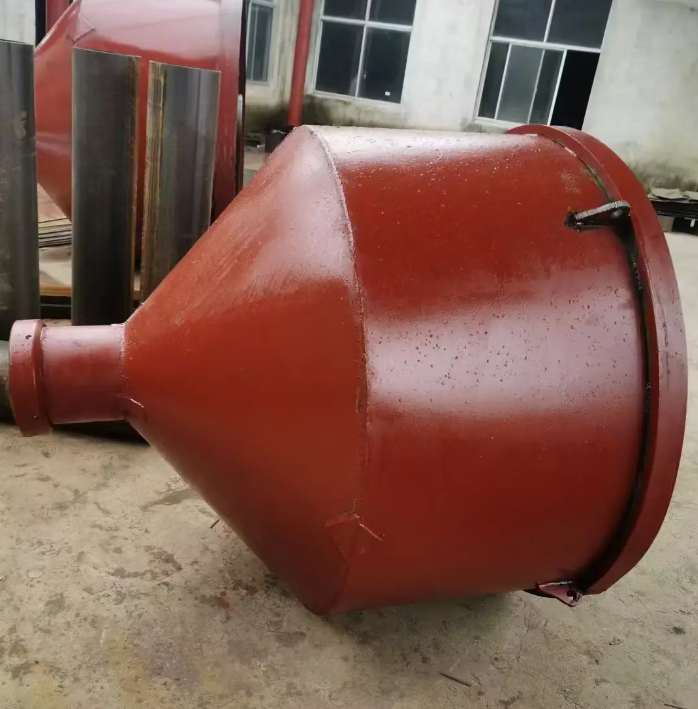
North Sea offshore wind project: reduced casing deformation and zero drive-stop incidents with seamless casing pipe
The North Sea offshore wind project showcased clear benefits with the use of seamless casing pipe in tough marine conditions. The installation of seamless units exhibited 28% less casing deformation than the welded equivalents, resulting in zero drive-stop incidents for all 112 piles, where dense glical till was present at depths of 45 meters. The welded units caused concentration points of casing stresses, hence the stopping of the driving process. Engineers were confident the seamless casing was able to withstand the impacts from the hammer throughout the driving process and the narrow time gaps in between tidal movements. This driving process interrupted the operations of the project. The seamless casing pipe and seamless units sustained integrity of shapes at the time of impacts. The results were consistent with the independent testing carried out in the Material Performance Report (2024), which stated a seamless pipe could continue to support 15-20% more cycles of pressures. The seamless solution also achieved the completion of all the foundation earlier than the planned time, a total of 12 days.
FAQS
What is seamless casing pipe, and how is it manufactured?
Seamless casing pipe is manufactured from a single steel billet which allows for a single pipe with a continuous wall and no welded joints. This means no weak points that can be caused by weld seams.
Why is seamless casing pipe preferred over welded pipes in foundation construction?
Seamless casing pipe have greater corrosion resistance, buckling resistance, fatigue resistance as compared to welded pipes. They also have greater structural integrity, failure to buckling resistance, and greater uniform resistance to stresses than do welded pipes.
What are the specifications for seamless casing pipe?
Seamless casing pipe fulfills and exceeds the limits of ASTM A252 Grade 3 and API RP 2A Level 3 standards, therefore fulfilling sufficient requirements for yield strength and ductility.
Why is it better to use pipes with tighter dimensional tolerances?
Seamless casing pipes controlled diameter and wall thickness tolerances lead to precise load capacity calculations and significantly reduce/further eliminate pile refusal, therefore expediting the installation time.
What is the field-proven performance of seamless casing pipe in demanding projects?
Seamless casing pipe has shown reduced deformation and improved durability under changing load conditions as well as continuous driving operations during projects such as the North Sea offshore wind installations.