EN
EN

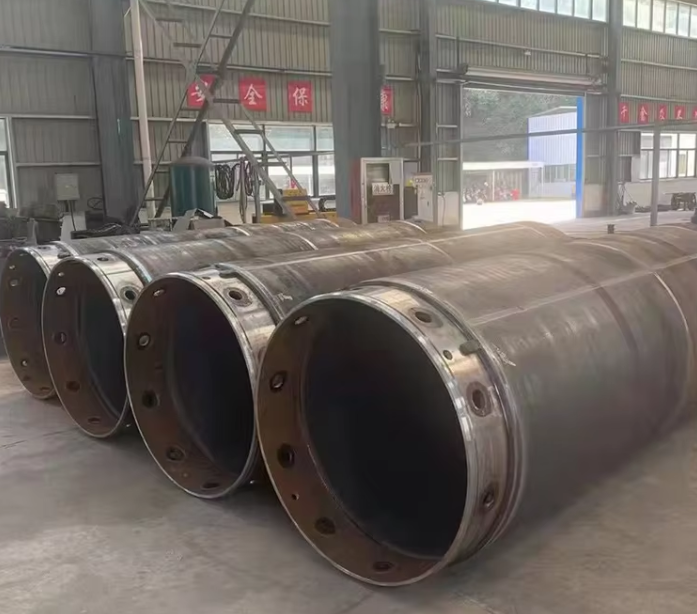
Anti-Corrosion Techniques to Extend Casing Pipe Life
Selecting Electrochemical Protection and Coatings
The optimal approach to provide longevity to casing pipes in a corrosive environment is to use a combination of electrochemical protection and advanced barrier coatings. In saline or corrosive moisture-laden formations, a sacrificial aluminum-zinc anode is used to create a galvanic circuit, effectively diverting the corrosion current away from the casing pipe. The use of fusion-bonded epoxy (FBE) and zinc silicate coatings provides an impermeable, chemically resistant barrier. It is well documented that uncoated carbon steel casing fails in aggressive soils in the order of 10 to 15 years while coated and cathodically protected systems exceed 50 years. In the selection of coatings, consider the formation's fluids, the temperature (≥120 C), and the ability to withstand abrasion encountered during installation. Measurement of anodes is done by potential mapping, and protective coatings are evaluated through adhesion and continuity tests with ultrasonic measurement.
Controlling Internal Corrosion Through Inhibitors and Dehydration
Internal corrosion is managed best by a combination of inhibition and the control of corrosion-associated moisture. The continuous injection of film-type amine inhibitors forms a barrier to the interior of the pipe, reducing corrosion up to 85 to 95% in CO₂ and H₂S-containing production. Additionally, dehydration is utilized to ensure that the moisture in the gas phase is kept below a critical level which is achieved by maintaining the relative humidity below 30%. Corrosion paths that are electrochemical are eliminated by moisture control in this region. Glycol absorbers that achieve a dew point below -40°C in conjunction with vapor-phase inhibitors that are used during well shut-ins provide effective protection. This approach has been shown to provide a 64% reduction in the failure rate of internal corrosion compared to systems without treatment. The ongoing measurement of residual inhibitors (25 to 50 ppm) and moisture content provides the opportunity to optimize moisture and corrosion control based on the real-time control of these parameters.
Maintain Mechanical Integrity with Advanced Casing Pipe Monitoring
Ultrasonic Thickness Evaluations and Real-Time Strain Monitoring
Ultrasonic thickness evaluation (UT) employs high-frequency sound to capture internal wall thickness with precision to the 0.001-inch level, making it ideal for detecting internal corrosion, earring, and pitting before they impact integrity. When combined with fiber optics and strain mapping, casing deformation and the stress of operational loads can be monitored continuously. Abnormal strain in bending, compression, and torsion results in immediate changes in the operation of the system to prevent failure of the system. Strain data is transformed from its raw format into restoration and maintenance predictions, allowing for a 40% reduction in failure and extension of the active life of the system through condition-based maintenance.
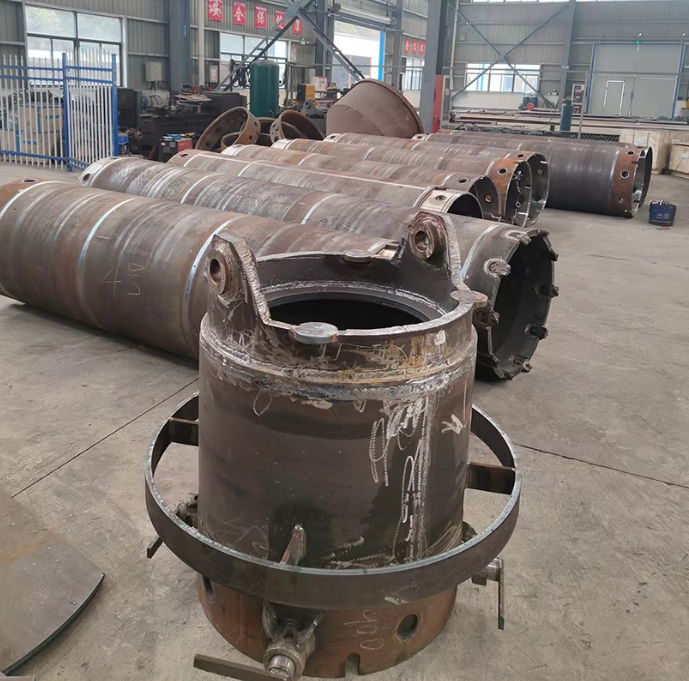
Fatigue Failure Detection with Acoustic Emission Assessment
The detection of fatigue failure is the result of emitted high stress smoke and the fragment of the casing that is escaping containment before a rupture or failure actually occurs. This may occur months before a breach occurs. The use of Acoustic Emission (AE) technology in high-risk production zones provides constant monitoring, as traditional means of monitoring in these zones are impossible. Communication is achieved through the pumping of fluids and drilling activities in the containment, but signal processing isolates scattered events and provides crack location with better than 3-foot resolution. Reinforcement of these high-risk failure zones is accomplished by predicting the likely course that these cracks will take, based on machine learning that is built on a history of priority zone degradation. This results in a less than 0% failure rate and removes the potential for collapse. Emplaced systems for late detection of cracks are replaced with AE monitoring, cutting costs, and environmental release risks, by 57% and 67% respectively.
Maximize the Service Life of Casing Pipe
Prevent Microannuli with Precision Cementing
For casing pipe integrity, microannuli leave particularly critical “shortcuts” for corrosive fluids and pressure to attack and compromise the casing integrity. The new generation of cementing technology employs computer-based fluid dynamics optimizations to improve annular fill. Centralizers, cementing, and casing rotation are all advancements that ensure a strong casing bond, and these practices lead to a 47% reduction in cement-related integrity failures.
Cement bond logs after the job are used to assess the need for repaired cement. Flexible epoxy resins are gaining popularity in vertically challenged applications. These resins expand, contract, and are flexible, maintaining a bond. Precision cementing protects casing pipe integrity from corrosive attacks, helps differential pressure loads, enhances service life, and reduces reinvestment work efforts.
FAQs
How Does Electrochemical Protection Work?
This technology employs the sacrificial aluminum-zinc anodes, creating a galvanic circuit that reroutes the corrosion and strengthens the pipe.
How Important is Using Chemical Inhibitors?
Internal corrosion is particularly harmful to pipe integrity and primarily falls within the pipe. Using amine inhibitors can lead to significant reductions in metal loss within a pipe containing production streams of CO₂ and H₂S.
Which technologies help assess the integrity of casing pipes?
Ultrasonic thickness testing, fiber-optic strain mapping, and acoustic emission analysis are early identification technologies of corrosion, deformation, and cracking of casing pipes. They focus on measuring the mechanical integrity of casing pipes.
What is the effect of precision cementing on the lifespan of casing pipes?
Precision cementing establishes firm fluid barriers, eliminating microannuli, and protects casing pipes against external corrosion, pressures, and loads. It also sustains structural integrity.