EN
EN

Here is the professionally optimized, SEO-ready English version of your article. I have formatted it to improve readability, search engine ranking potential, and user engagement.
[SEO Metadata]
Title Tag: Core Barrel Auger vs. Drilling Bucket: Choosing the Right Tool for Hard Rock Projects
Meta Description: Drilling in rock 70 MPa? Discover why core barrel augers outperform standard drilling buckets for sample integrity, project safety, and cost reduction in deep foundations.
URL Slug: /core-barrel-auger-vs-drilling-bucket-hard-rock-drilling
Core Barrel Auger vs. Drilling Bucket: Selecting the Right Tool for Hard Rock Projects
For geotechnical engineering projects involving rock formations with uniaxial compressive strengths (UCS) exceeding 70 MPa, conventional drilling methods are often insufficient. Standard drilling buckets rely on scraping and scooping, which fail to penetrate high-strength, low-fracture rock effectively.
Selecting the right tooling is not just a matter of operational speed; it is foundational to structural safety, regulatory compliance, and long-term asset resilience.
The Operational Limitation of Standard Drilling Buckets
Standard drilling buckets are designed to scrape and scoop. In formations with strength ≥70 MPa, these tools face significant performance barriers:
High Slip Rates: Drag-based cutting generates slip rates of up to 80%, wasting energy and slowing penetration.
Efficiency Losses: According to Drilling Technology Quarterly (2023), efficiency losses exceed 40% in such formations.
Compromised Fidelity: The scraping action fragments geological features, erasing vital information about bedding planes and fractures. This results in disturbed samples that can lead to a margin of error of up to 40% in geotechnical design (ISRM 2023).
The Core Barrel Auger: Precision Engineering for Intact Rock
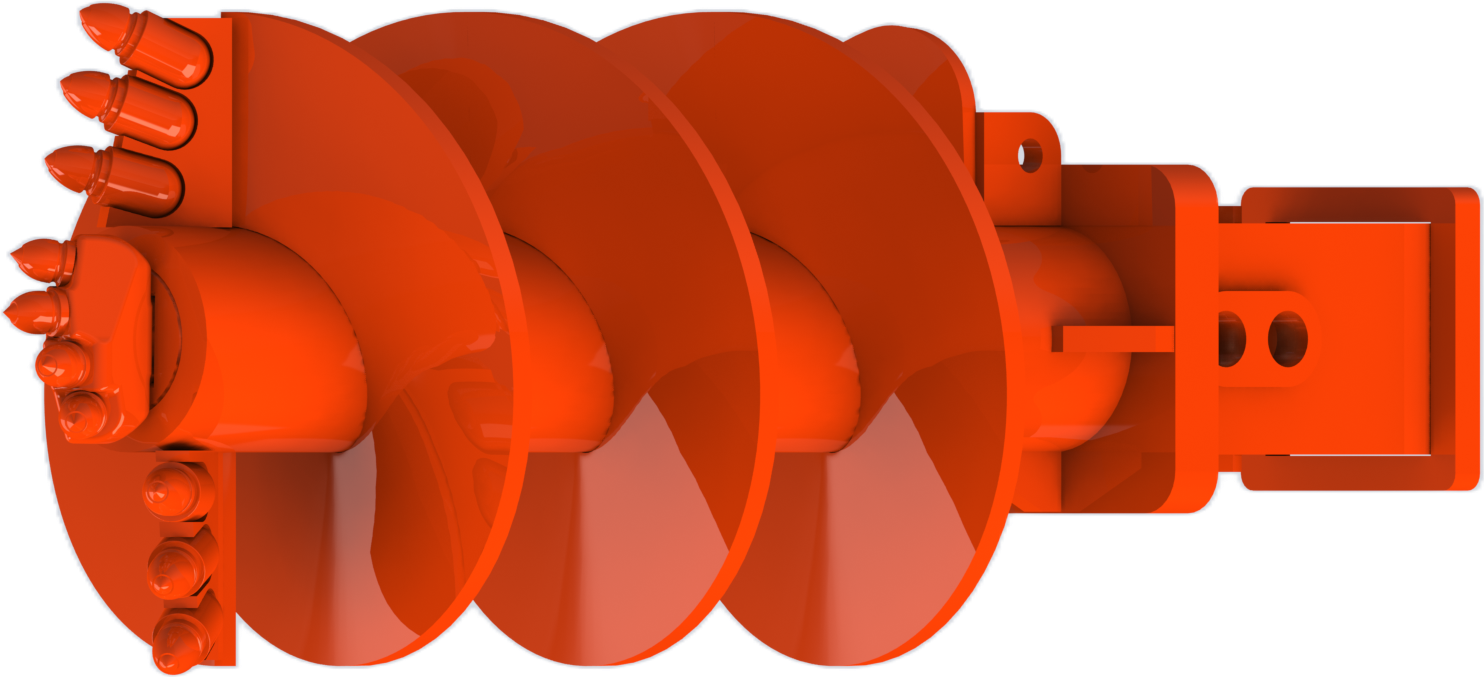
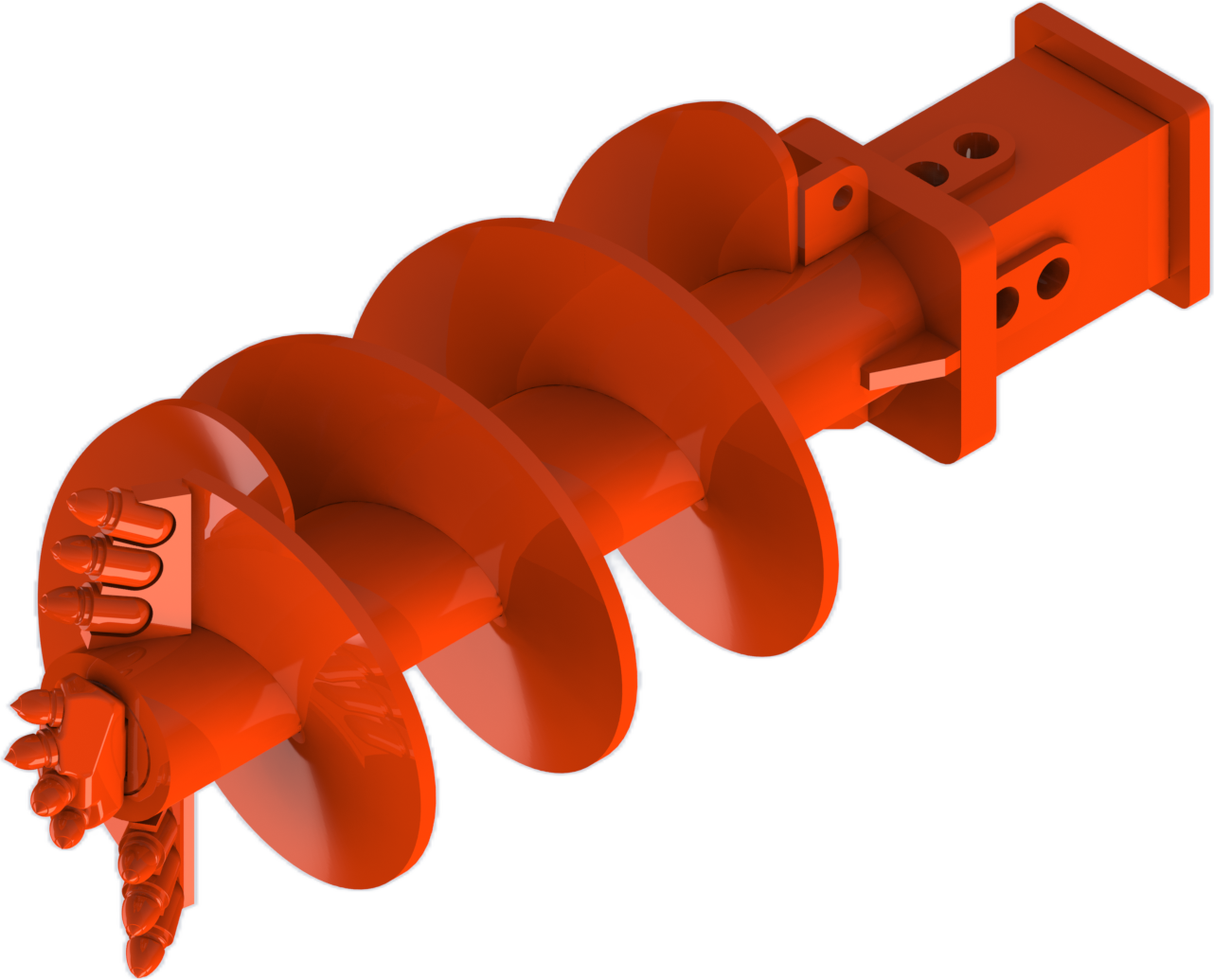
The core barrel auger overcomes the limitations of drag-based cutting by employing a rotational grinding (kerf) mechanism. By concentrating force circumferentially using tungsten carbide teeth or roller bits, it isolates a cylinder of rock with minimal disturbance.
Why It Excels:
Undisturbed Core Retention: The dual-wall architecture stabilizes the borehole and protects the core during extraction, a requirement for ASTM D5079 verification.
Structural Superiority for Deep Foundations: Beyond 50 meters, the core barrel’s twin-wall construction absorbs torque and maintains vertical alignment, preventing the borehole deviation common with open buckets.
Data Reliability: By preserving discontinuity geometry, engineers can model compressive strength, RQD, and deformation modulus with <5% lab-to-field variance.
Comparative Matrix: Choosing the Right Tool
| Feature | Standard Drilling Bucket | Core Barrel Auger |
| Primary Action | Scraping/Scooping | Rotational Grinding (Kerf) |
| Rock Suitability | Weathered/Fractured (<50 MPa) | Hard/Intact (70 MPa) |
| Sample Quality | Disturbed (Fragmented) | Undisturbed (Cylindrical) |
| Energy Efficiency | High slip / Low performance | Optimized force distribution |
| Foundation Impact | High risk of under/over-design | Proactive risk mitigation |
When Core Barrel Augers Become Non-Negotiable
For high-load structures—such as bridge piers, skyscrapers, and energy infrastructure—bearing capacity depends entirely on the undisturbed mechanical properties of the bedrock.
Using disturbed samples in these contexts creates an unacceptable risk profile:
Under-design: Leads to unsafe settlements and structural failure.
Over-design: Leads to unnecessary material and cost overruns.
While core barrel augers may have higher upfront costs or slower penetration speeds compared to buckets, the Total Cost of Ownership (TCO) is significantly lower when factoring in the elimination of redesign costs and the mitigation of long-term structural risk.
Frequently Asked Questions (FAQ)
What is the core barrel auger design best suited for?
The core barrel auger excels in extracting undisturbed samples from hard, intact rock formations (typically 70 MPa). It is the industry standard for projects requiring high-fidelity geotechnical data.
How does it achieve undisturbed sample extraction?
Its dual-wall design stabilizes the borehole, while the circumferential grinding action minimizes axial displacement, ensuring the core remains intact.
Why do standard drilling buckets fail in hard rock?
They rely on scraping, which is ineffective in low-fracture rock, leading to energy waste, rapid tool wear, and compromised sample integrity.
How do I decide between the two?
The choice is site-specific. If your project involves deep foundations or requires precise RQD and strength characterization to meet ASTM standards, the core barrel auger is the only choice that ensures geotechnical design validity.
Ready to Optimize Your Geotechnical Workflow?
Are you managing a deep foundation project with challenging rock conditions? Don't let inaccurate data compromise your structural integrity.
[Contact Our Technical Support Team] for a consultation on selecting the optimal drilling tools for your specific site profile.
[Download Our Geotechnical Drilling Best Practices Guide] to learn more about site characterization and risk mitigation.
Table of Contents
- Core Barrel Auger vs. Drilling Bucket: Selecting the Right Tool for Hard Rock Projects
- The Operational Limitation of Standard Drilling Buckets
- The Core Barrel Auger: Precision Engineering for Intact Rock
- Comparative Matrix: Choosing the Right Tool
- When Core Barrel Augers Become Non-Negotiable
- Frequently Asked Questions (FAQ)
- Ready to Optimize Your Geotechnical Workflow?