EN
EN

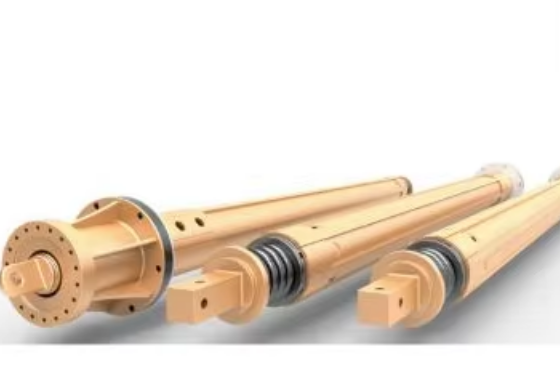
Why Kelly Bar Length Calibration Is Critical for Deep Drilling Stability
The Instability Cascade: How Mismatched Kelly Bar Length Triggers Deflection, Buckling, and Drilling Failure
Getting the kelly bar length wrong starts all sorts of problems when drilling deep foundations. If those telescopic sections go past what they're designed for, especially below about 45 meters down, things start going sideways pretty fast. The lateral movement gets worse as the drill pushes harder against resistance. What happens next is the stress builds up right where the sections connect, which makes them buckle much sooner than expected. Real world tests show something interesting too: just a small error of 5% in length can make deflection risks jump by around 40%. And that means broken tools and collapsed holes most of the time. Eventually this whole mess leads to complete rig shutdowns, and nobody wants to see a project lose money like that. We've seen incidents set back operations by over seven hundred forty thousand dollars each time it happens.
Core Principle: Synchronizing Telescopic Sections, Penetration Depth, and Structural Slenderness Ratio
Optimal kelly bar performance hinges on calibrating three interdependent variables:
- Telescopic section sequencing: Each extension phase must maintain uniform wall thickness-to-diameter ratios
- Depth penetration thresholds: Maximum drilling depth must not exceed 80% of the bar's critical buckling load
- Slenderness ratio (І): Maintain І ≤ 120 through controlled section retraction/extension cycles
Engineers achieve stability by calculating the Euler buckling load against site-specific crowd forces and mast alignment tolerances. For instance, synchronizing a 4-section telescopic bar with a І of 90 reduces energy loss by 28% compared to uncalibrated systems. This precision prevents lock disengagement and ensures torque transmission efficiency across all drilling phases.
Torque Integrity and Buckling Resistance: Engineering the Kelly Bar for Depths Beyond 45 Meters
Torque Transmission Breakdown: Diagnosing Lateral Deflection and Energy Loss in Over-Extended Kelly Bars
When kelly bar sections exceed their optimal extension length, lateral deflection becomes inevitable. This bending redirects rotational energy away from the drill head, causing up to 40% torque loss at 50-meter depths. The instability manifests as:
- Premature wear at telescopic joints
- Vibration harmonics exceeding 2.5 mm amplitude
- Drill head stalling in cohesive soils
Stiffness-Based Design: Calculating Critical Buckling Load Against Crowd Force and Mast Alignment Tolerance
Preventing structural collapse requires calculating the Euler critical load (Pcr = π²EI/Leff²) relative to operational forces. Key design parameters include:
| Variable | Impact on Buckling Resistance | Tolerance Threshold |
|---|---|---|
| Slenderness Ratio (L/r) | ↑ Ratio = ↓ 15% strength per 10m | ≤ 120 for depths 45m |
| Mast Vertical Alignment | 1° deviation = ↑ 18% buckling risk | < 0.5° from plumb |
| Crowd Force (Fc) | Must be < 60% of Pcr | Fc ≤ 0.6Pcr |
Stiffness optimization requires high-strength steel alloys (yield strength ≥690 MPa) to maintain borehole integrity while transmitting 35+ kN·m torque at maximum extension.
Rig Integration Essentials: Matching Kelly Bar Specifications to Mast Height, Crowd Stroke, and Winch Capacity
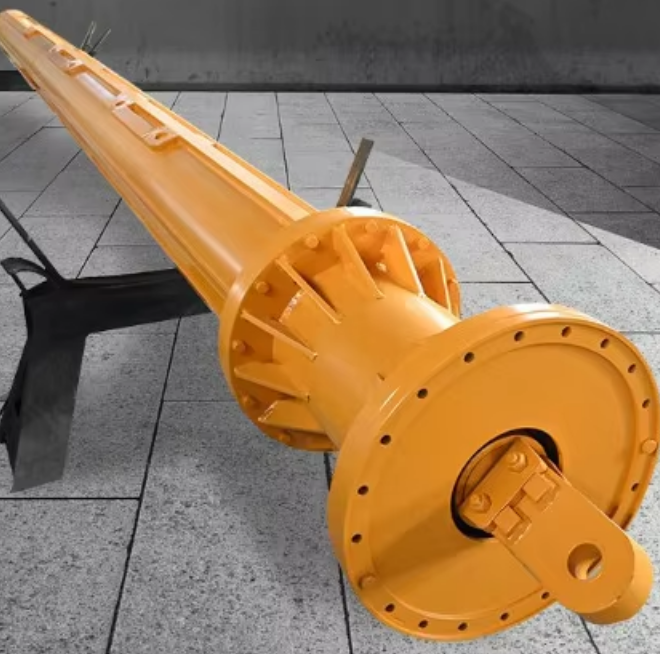
Compatibility Failures: Mechanical Lock Disengagement and Stroke-Extension Mismatch in High-Capacity Rigs
Getting the kelly bar specs wrong can lead to major problems when drilling deep foundations. If the crowd stroke gets too long for what the kelly bar can handle, there's real danger of the mechanical lock coming loose suddenly when torque builds up from spinning. This throws off the whole drilling alignment, making the bit drift at angles over 3 degrees. Another common issue comes when the winch isn't strong enough compared to how tall the mast stands. That creates a mismatch between strokes and extensions, putting extra stress on those connecting pins and wearing down the structure much faster than normal.
| Failure Mode | Primary Cause | Operational Impact |
|---|---|---|
| Lock Disengagement | Crowd stroke Bar extension | Torque loss, borehole deviation |
| Stroke-Extension Mismatch | Winch capacity < Mast height | Pin shear failure, downtime ≥ 48 hours |
High-capacity rigs demand precise synchronization:
- Mast height must align with the kelly bar's fully extended length to prevent buckling.
- Winch line pull capacity should exceed the bar's maximum suspended weight by 25%.
- Crowd force must stay below the critical slenderness ratio of telescopic sections.
Neglecting these parameters risks project delays costing over $740k. Always verify load charts and torque limits before deployment.
FAQ
Why is calibrating the kelly bar length important?
Calibrating the kelly bar length is crucial to prevent deflection, buckling, and drilling failures, which are particularly problematic at depths beyond 45 meters.
What happens if the kelly bar extension exceeds optimal length?
If the kelly bar extension exceeds optimal length, it can lead to lateral deflection, torque loss, and increased wear and tear on equipment.
How does mismatching kelly bar specifications affect drilling operations?
Mismatched specifications can result in mechanical lock disengagement, stroke-extension mismatch, and can lead to significant downtime and operational costs.