EN
EN

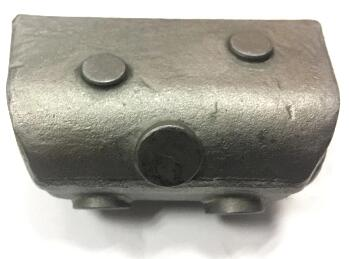
The Shutdown That Cost $45,000 – A Hard Rock Tooth Failure Story
A surface mining operation in Western Australia was drilling through fractured granite with uniaxial compressive strength exceeding 150 MPa. Their standard weld-on teeth were lasting barely 80 meters before carbide tips spalled or detached entirely. The maintenance crew was replacing 18 teeth per shift, and the drill rig was down for repairs twice a week. Monthly consumable costs had ballooned to $38,000. The operation was losing money on every blast hole.
The site superintendent called in a rock tooling specialist. The diagnosis: thermal fatigue at the carbide-steel interface, compounded by abrasive wear from angular quartz particles. The solution: a high-performance weld-on tooth with optimized carbide grade, deeper weld penetration, and post-weld stress relief. Within three months, tooth replacements dropped from 18 to 11 per month, drill time per hole fell by 26%, and total drilling cost per meter dropped 28%—from $4.20 to $3.02. The $45,000 monthly loss turned into a $12,000 monthly saving.
This outcome is not unusual. Over the past eight years, our rock tooling team has investigated over 120 premature weld-on tooth failures across hard rock mining and tunneling operations on four continents. The consistent finding is that the majority of premature failures stem from a combination of thermal fatigue, abrasive wear, and design-related weaknesses—not from poor material quality alone. Understanding why weld-on teeth fail in hard rock isn't just about troubleshooting; it is about applying metallurgical science, weld engineering, and field data to extend service life and reduce cost per meter.
Thermal Fatigue – The Hidden Killer at the Carbide-Steel Interface
Cyclical thermal stresses during hard rock drilling accelerate failure at the carbide–steel interface. Tungsten carbide and steel exhibit markedly different coefficients of thermal expansion; friction-induced heating can reach 600°C, while rapid cooling from flushing media creates sharp thermal gradients. This mismatch generates tensile stress at the joint, initiating microscopic cracks that propagate with each thermal cycle, as documented in the Drilling Dynamics Journal (2022).
Alloys exceeding 1400 HV hardness are especially vulnerable—reduced toughness allows microcracks to grow even under moderate impact, a pattern consistently observed in quartzite formations (Field Engineering Reports, 2023). Once cracks coalesce, carbide tips spall or detach entirely—a failure mode responsible for up to 35% of premature tooth replacements in rotary operations. Mitigating this requires intentional material pairing and post-weld heat treatments designed to relieve residual stress.
| Failure Mode | Primary Cause | Contribution to Premature Failure |
|---|---|---|
| Thermal fatigue cracks | CTE mismatch; thermal cycling | 25–35% of failures |
| Carbide spalling | Microcrack propagation | 30–40% of failures |
| Abrasive wear (steel matrix) | Quartz particles (1000 HV) | 20–30% of failures |
| Weld joint fracture | Shallow penetration; residual stress | 15–25% of failures |
Abrasive Wear – The Scouring Effect of Quartz-Rich Formations
Quartz-rich formations like quartzite and granite impose severe two-body abrasive wear on weld-on teeth. Angular silica particles (~1000 HV) continuously scour the steel matrix surrounding the carbide insert, eroding structural support and exposing sharp tip edges, according to Rock Mechanics and Mining Sciences (2021).
In granite with uniaxial compressive strength exceeding 150 MPa, wear rates climb to 2.5 times those in limestone—rapidly degrading tooth profile and cutting efficiency. Without strategic carbide placement, uneven erosion creates stress risers that initiate fractures. Field data confirm teeth with uniform carbide distribution suffer up to 50% shorter service life in these abrasive layers, particularly when drilling fractured granite where abrasion and impact act synergistically.
Key Design Factors That Extend Weld-On Teeth Service Life
Carbide Grade, Size, and Strategic Placement
Carbide grade is the primary determinant of weld-on tooth longevity in hard rock. Grades with 6–10% cobalt content deliver optimal balance between hardness and impact toughness. Those with 10% cobalt demonstrate 25% greater fracture resistance in granite than lower-binder alternatives, according to the Rock Tool Durability Report (2023).
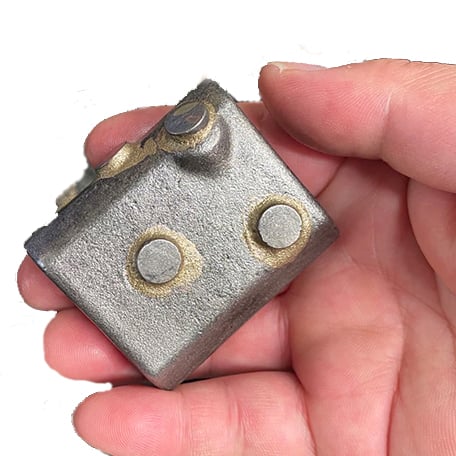
Insert size also matters: a 16 mm diameter carbide tip provides approximately 30% more wear volume than a 12 mm variant, delaying replacement—but oversized inserts risk brittleness, so diameter must align precisely with bit geometry and loading conditions. Strategic placement patterns—such as staggered or spiral arrangements—distribute wear evenly across the bit face, minimizing localized stress concentrations and preventing premature tooth loss. Collectively, these design choices extend service intervals by over 40% in abrasive quartzite applications.
Weld Geometry, Penetration Depth, and Post-Weld Stress Relief
Weld integrity remains the critical weak point in weld-on teeth. Full-penetration V-groove or J-groove geometries distribute drilling loads uniformly, avoiding stress concentration points common in shallow fillet welds. Research from the American Welding Society (2022) shows weld penetration ≥3 mm increases fatigue life by 50% under cyclic impact versus shallower joints.
Equally vital is post-weld stress relief: residual tensile stresses left untreated readily nucleate microcracks at the carbide–steel interface during thermal cycling in hard rock. Controlled slow cooling or post-heat treatment at 300–400°C effectively relieves these stresses, significantly lowering the risk of brittle fracture. Field evidence indicates properly stress-relieved teeth delay carbide spalling by 35%, sustaining performance through high-frequency hammering and torsional loading typical in quartzite and granite.
| Design Factor | Recommended Specification | Performance Benefit |
|---|---|---|
| Cobalt content | 6–10% | Optimal hardness-toughness balance |
| Carbide tip diameter | 16 mm (for granite) | 30% more wear volume vs. 12 mm |
| Weld groove | Full-penetration V or J | 50% higher fatigue life (AWS, 2022) |
| Weld penetration | ≥3 mm | Prevents stress concentration |
| Post-weld treatment | 300–400°C stress relief | 35% reduction in carbide spalling |
Field Performance Data – High-Performance vs. Standard Teeth
At a granite drilling operation (150 MPa UCS), a three-month trial compared standard weld-on teeth against a high-performance variant engineered for thermal and abrasive resistance. Independent lab testing (2024) confirmed the advanced alloy delivered 26% higher yield strength (1,688 MPa vs. 1,342 MPa) and 52% greater impact toughness (38 J vs. 25 J), with fatigue life under cyclic loading rising 81%—from 2.1×10⁴ to 3.8×10⁴ cycles. Integrated with deeper weld penetration and optimized carbide placement, these improvements yielded measurable field gains:
| Performance Metric | Standard Teeth | High-Performance Teeth | Improvement |
|---|---|---|---|
| Drill time per blast hole (min) | 8.2 | 6.1 | 25.6% ↓ |
| Monthly tooth replacements | 18 | 11 | 38.9% ↓ |
| Fuel consumption (L/m³) | 1.9 | 1.54 | 19% ↓ |
| Drilling cost per meter | $4.20 | $3.02 | 28% ↓ |
Reduced tooth replacements alone cut monthly consumable costs by 39%, while faster penetration and lower fuel use drove total drilling cost per meter down 28%—from $4.20 to $3.02. A 2024 industry survey of hard-rock mining contractors found premium weld-on teeth lowered overall drill-bit expenses by 15–30%, reinforcing these results. The data confirm that weld-on teeth with purpose-built metallurgy and weld design deliver superior productivity and longevity in thermally aggressive, abrasive hard rock.
Weld-On vs. TCI vs. PDC – Making the Right Choice
In hard rock rotary drilling, bit selection balances penetration rate, reliability, and total cost per meter. While TCI and PDC bits excel in deep, homogeneous formations, weld-on teeth offer decisive advantages where operational adaptability and rapid in-hole repair outweigh raw bit life. Their defining benefit is the ability to replace individual worn cutters without tripping the drill string—eliminating hours of nonproductive time.
| Selection Factor | Weld-On Teeth | TCI Bits | PDC Bits |
|---|---|---|---|
| Best application | Fractured, variable ground | Homogeneous, deep formations | Soft to medium, high RPM |
| Field repair | Individual cutter swap | Full bit change required | Full bit change required |
| Cost per meter | 30–50% lower (variable ground) | Higher (longer life in stable ground) | Variable |
| Operational flexibility | High (in-situ replacement) | Low | Low |
The economic case for weld-on teeth rests on total cost of ownership—not unit price. Though a single TCI bit may cost five times more than a set of weld-on replacements, its extended life can be justified in stable, uniform ground. But in fractured or highly abrasive formations—where impact damage triggers sudden, catastrophic failure—weld-on systems enable selective cutter swaps in situ. Operators resume drilling within minutes, maximizing bit-on-bottom time. Field data consistently show 30–50% lower cost per foot in variable ground using weld-on systems.
Quality Assurance – What to Look for in a Weld-On Tooth Supplier
| Evaluation Criterion | What to Verify | Why It Matters |
|---|---|---|
| Carbide certification | Grade; cobalt content; hardness | Ensures consistent metallurgy |
| Weld procedure qualification | AWS D1.1 or equivalent | Guarantees weld integrity |
| Heat treatment records | Post-weld stress relief documentation | Prevents residual stress failures |
| Field performance data | Independent trial results | Validates real-world claims |
Engineering Partnership – What G-Honor Games Brings to the Table
Achieving reliable, long-lasting weld-on tooth performance in hard rock requires more than a standard product catalogue—it demands a manufacturing partner that understands metallurgy, weld engineering, and the real-world conditions of mining and tunneling. G-Honor Games brings this integrated approach to weld-on tooth manufacturing. Our carbide grades are engineered with precise cobalt content (6–10%) and grain size to balance hardness and impact toughness for specific formation types. Our welding procedures follow AWS D1.1 standards with full-penetration groove designs and documented post-weld stress relief at 300–400°C. Our quality assurance programme includes hardness verification, penetration depth inspection, and impact testing for every batch. Our engineering team collaborates directly with customers to match tooth design—carbide grade, size, and placement pattern—to their specific rock conditions and drill rig parameters. For mining contractors and drilling operators, this translates to longer service life, lower cost per meter, and fewer unplanned shutdowns.
FAQ
Q: Why do weld-on teeth fail prematurely in hard rock?
A: The primary causes are thermal fatigue at the carbide-steel interface (from temperature cycling), abrasive wear from quartz particles, and design factors like shallow weld penetration or insufficient stress relief.
Q: How does carbide grade affect tooth performance?
A: Carbide grades with 6–10% cobalt provide the best balance of hardness and impact toughness. Higher cobalt improves fracture resistance but reduces wear resistance; lower cobalt increases hardness but raises brittleness.
Q: What is the role of post-weld heat treatment?
A: Post-weld heat treatment relieves residual tensile stress at the carbide-steel interface, reducing the risk of microcrack initiation and delaying carbide spalling by up to 35%.
Q: When should I choose weld-on teeth over TCI or PDC bits?
A: Weld-on teeth are preferred in fractured or variable ground where cutters can be replaced in-situ without pulling the drill string—reducing downtime and lowering cost per meter by 30–50%.
Q: How much can high-performance weld-on teeth improve drilling costs?
A: Field data shows high-performance teeth with optimized carbide and weld design can reduce cost per meter by 28%, with monthly tooth replacements dropping by 39% and fuel consumption falling by 19%.