EN
EN
The $45,000 Week – When Downtime Ate the Profit
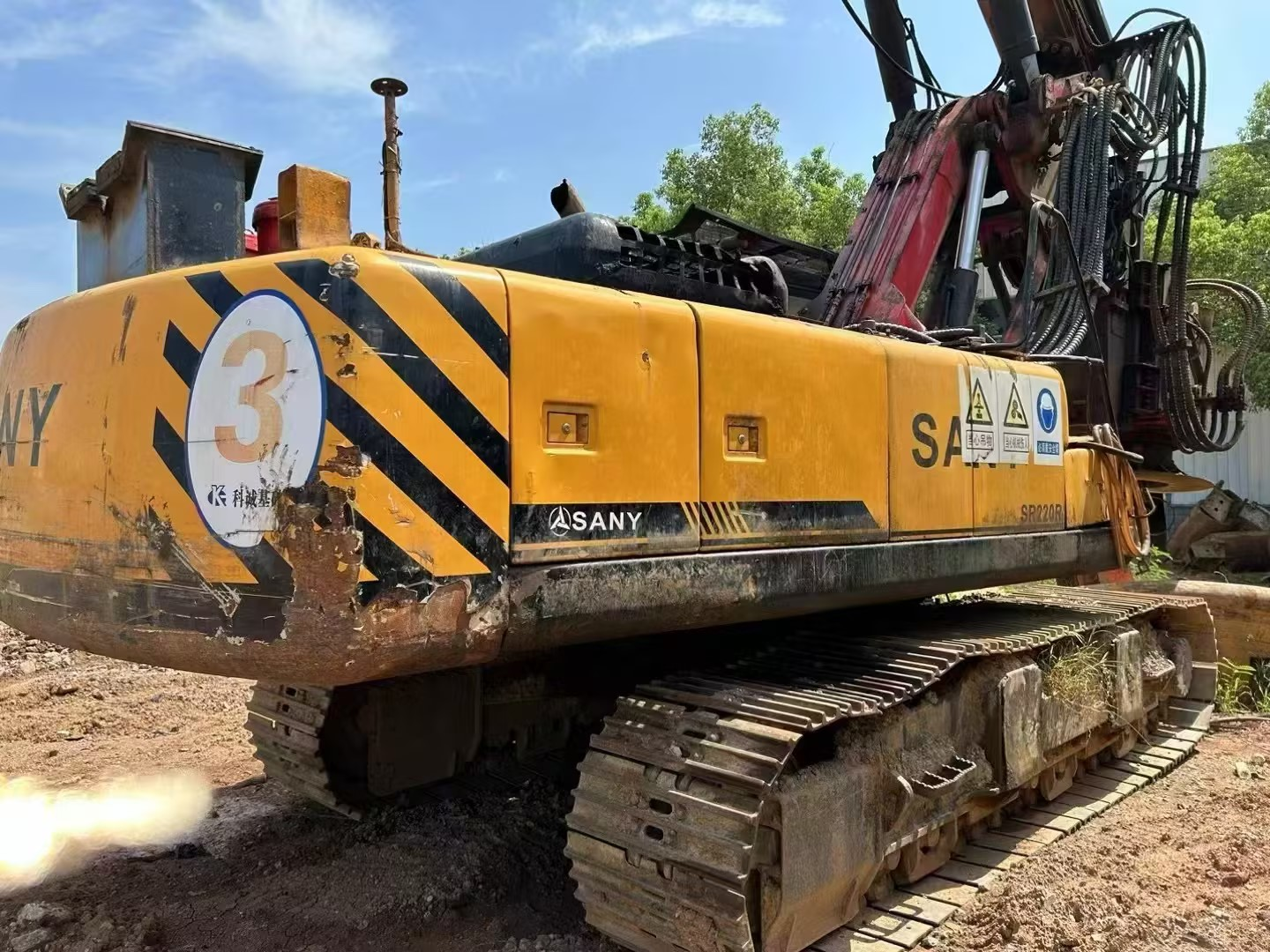
A foundation contractor in the Midwest was drilling 80 belled shafts for a new warehouse complex. By the end of the first week, they had completed only 12 piles—far behind the projected 20. The delays weren't from hard rock or equipment breakdowns. They were from changeovers. Switching between augers, core barrels, and cleaning buckets consumed 20 to 30 minutes per swap. On a site with multiple soil transitions, that added up to over four hours of non-productive time each day. By Friday, the project was already a week behind, and the contractor had eaten through $45,000 in unplanned labor and extended equipment rental costs.
The superintendent decided to try a different approach. He brought in a modular Kelly bar rig with a hydraulic quick-coupler and pre-configured interchangeable tools. Changeovers dropped from 25 minutes to under two minutes. Daily productive drilling time increased by nearly three hours. By the end of the second week, the crew had completed 32 piles—catching up to schedule and then pulling ahead. The same crew, the same ground, but a different tooling philosophy turned a losing week into a winning project.
This experience is far from unique. Over the past six years, our foundation drilling team has analyzed over 200 piling projects where downtime was the primary driver of cost overruns and schedule delays. The consistent finding is that the largest productivity losses come not from hard rock or difficult ground, but from preventable downtime—changeovers, spoil handling delays, and tool mismatches. Understanding how to design foundation drilling tools for continuous operation isn't just about equipment selection; it is about protecting your schedule, your budget, and your reputation.
Multi-Tool Kelly Bar Rigs – Eliminating Changeover Delays
On mixed-ground projects, switching between augers, core barrels, and cleaning buckets can consume 20–30 minutes per change—adding hours of non-productive time daily. Multi-tool Kelly bar rigs eliminate this bottleneck via modular compatibility: a single mast supports a hydraulic quick-coupler and pre-configured, interchangeable Kelly bars—each matched to a specific tool type.
| Feature | Traditional Changeover | Multi-Tool Kelly Bar Rig |
|---|---|---|
| Changeover time | 20–30 minutes | Under 2 minutes |
| Crane support required | Often yes | No (rig-mounted) |
| Crew reconfiguration | Required | Minimal |
| Daily productive time | Limited by changeovers | Maximized |
| Typical productivity gain | Baseline | Up to 25% increase in daily piles |
Operators lock onto new tools directly from the rig, often without crane support or crew reconfiguration. This allows transitions from soft-soil drilling to hard-rock coring in under two minutes, keeping the rotary drive engaged nearly continuously. The result is a dramatic reduction in changeover-related idle time—some contractors report up to a 25% increase in daily socketed piles. By keeping the hammer turning and crews focused on drilling—not rigging—modular Kelly bar systems transform what was once a repetitive pause into a seamless step in foundation construction.
CFA and Displacement Drilling Systems – Reducing Spoil Handling and Borehole Instability
Continuous Flight Auger (CFA) and displacement drilling systems address two major cycle disruptors: spoil handling and borehole collapse. CFA rigs drill with a hollow-stem auger while pumping concrete through its center—forming the pile in one continuous operation. Spoil lifts along the flights with minimal separate excavation, and the immediate concrete placement stabilises the borehole walls, significantly reducing sidewall failure risk in unstable ground.
| Feature | Conventional Bored Pile | CFA / Displacement System |
|---|---|---|
| Spoil handling | Separate excavation required | Minimal (CFA) or none (displacement) |
| Borehole stability | Requires casing or slurry | Concrete placement stabilises immediately |
| Cycle consistency | Variable; multiple pauses | Predictable; continuous |
| Typical speed gain (silty soils) | Baseline | 30% faster |
| Productivity in soft clays | Baseline | Up to 2× faster (displacement) |
Displacement tools, meanwhile, laterally compact soil rather than removing it—eliminating spoil handling entirely. Both methods sustain a predictable, repeatable drill-concrete-withdraw rhythm, avoiding pauses for casing insertion or spoil clearing. Field data from European piling contractors shows CFA cycles can be 30% faster than conventional bored piles in silty soils, while displacement rigs routinely double productivity in soft clays. By removing fragmentation points in the drilling shift, these systems deliver consistent cycle times—making project scheduling truly reliable.
Smart Adaptation – Real-Time Torque and Penetration Optimization
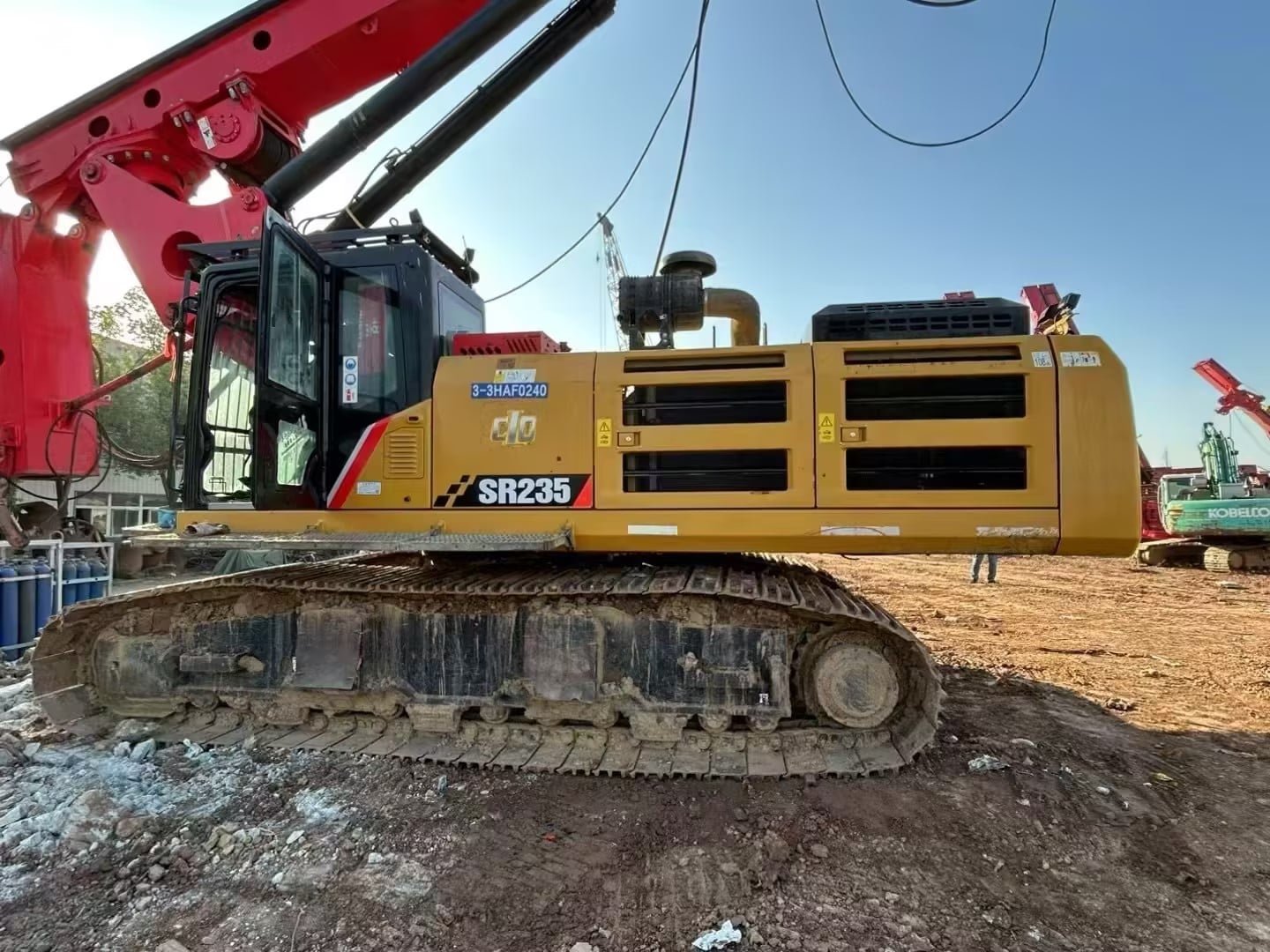
Unpredictable soil, rock, or mixed strata can quickly stall a piling operation—but smart adaptation keeps the rig running. By continuously sensing subsurface conditions and adjusting in real time, modern foundation drilling tools convert sudden changes into managed transitions, eliminating the trial-and-error that causes stuck tools and re-drills.
Drilling into variable ground often triggers sharp torque spikes that bind the tool string. Real-time torque and penetration rate (ROP) optimisation detects these signals and instantly adjusts thrust and rotation speed to maintain efficient cutting without overloading the formation. When resistance jumps—such as entering a cobble layer—the controller briefly reduces weight-on-bit or slows rotation, allowing cutters to clear obstructions before advancing.
| Performance Metric | Without Smart Adaptation | With Smart Adaptation |
|---|---|---|
| Unplanned stoppages | Baseline | Up to 18% reduction |
| Re-drill incidents | Frequent | Reduced by 50% |
| Cutter life | Standard | Extended |
| Rig time lost per shift | Significant | Hours saved |
A 2023 field study found this closed-loop control reduces unplanned stoppages by up to 18%, cutting re-drill incidents by more than half and saving hours of rig time per shift. Modern foundation drilling tools with millisecond-response controllers remove guesswork from ground variability—turning unpredictable strata into a controlled, repeatable process. The outcome is stable cycle times, extended cutter life, and significantly less downtime.
Automated Bit and Auger Selection – Data-Driven Tool Matching
Mismatched tooling slows penetration, accelerates wear, and forces unscheduled swaps. Automated selection uses real-time in-situ data—including soil strength index, grain size distribution, and moisture content—to recommend the optimal bit or auger from a digital catalogue.
| Trigger Condition | Recommended Tool Change | Benefit |
|---|---|---|
| Transition: loose sand → stiff gravel | Hex-shaft auger with carbide cutters | Maintains penetration; reduces wear |
| Water-saturated silt detected | Bailer-style auger | Prevents borehole instability |
| Hard layer encountered | Rock bit with tungsten carbide inserts | Avoids stuck tools; protects string |
For example, detecting a transition from loose sand into stiff, layered gravel may trigger a switch to a hex-shaft auger with carbide-tipped cutters; sudden water-saturated silt might prompt a bailer-style auger to prevent borehole instability. This data-driven matching ensures tools operate within their design envelope—protecting both equipment and performance. Consistent, condition-responsive selection eliminates productivity dips caused by trial-and-error changes, resulting in fewer bit replacements, reduced unscheduled maintenance, and a steady operational rhythm across the entire piling fleet.
Support Systems – Calibration, Preventive Maintenance, and Rapid Component Swapping
Unplanned downtime on piling sites can cost over $12,000 per hour, according to Construction Executive (2023), making support infrastructure as critical as the foundation drilling tools themselves. A structured protocol combining real-time calibration, preventive inspections, and quick-change component systems sustains high uptime during demanding shifts.
| Support Activity | Frequency | Purpose |
|---|---|---|
| On-site calibration | Daily (soil profile dependent) | Prevents overloading; extends tool life |
| Hydraulic fluid purity check | Every 50 operating hours | Catches degradation early |
| Kelly bar wear inspection | Every 50 operating hours | Prevents failure before breakdown |
| Rapid component swap | As needed (modular system) | <20 minutes; avoids lengthy teardowns |
Daily on-site calibration aligns torque limiters, crowd force settings, and rotary speed to the actual soil profile—preventing unnecessary overloading that leads to premature wear or stuck tools. This is reinforced by preventive maintenance schedules, such as monitoring hydraulic fluid purity and inspecting Kelly bar wear indicators every 50 operating hours, enabling crews to catch degradation before it becomes failure.
When repairs are needed, modular tool interfaces support rapid component swapping. Worn auger drive units or damaged casing oscillators can be replaced with factory-preset assemblies in under 20 minutes—bypassing lengthy teardowns. This "remove-and-replace" strategy converts maintenance events into short service windows rather than shift-ending breakdowns, preserving the uptime gains delivered by high-performance foundation drilling tools and minimising secondary delays across the piling cycle.
Quality Assurance – What to Look for in Foundation Drilling Tools
| Evaluation Criterion | What to Verify | Why It Matters |
|---|---|---|
| Quick-coupler reliability | Hydraulic pressure rating; locking mechanism | Ensures safe, fast changeovers |
| Kelly bar compatibility | Torque rating; shank interface | Prevents mismatch and strain |
| Tool wear life | Carbide grade; field test data | Reduces unscheduled swaps |
| Support network | Parts availability; service response | Minimises downtime |
| Industry standards | API, ISO, or DIN compliance | Confirms quality and safety |
Engineering Partnership – What G-Honor Games Brings to the Table
Achieving continuous, high-productivity foundation drilling requires more than selecting tools from a catalogue—it demands a manufacturing partner that understands piling operations, modular design, and field reliability. G-Honor Games brings this integrated approach to foundation drilling tool manufacturing. Our multi-tool Kelly bar systems feature hydraulic quick-couplers with sub-two-minute changeover capability, engineered to match your rig and tooling requirements. Our CFA and displacement drilling tools are designed for consistent cycle times, with carbide-tipped components that withstand abrasive ground conditions. Our engineering team collaborates directly with foundation contractors to match tool selection—augers, core barrels, cleaning buckets—to project-specific soil reports and rig specifications. Our integrated supply chain ensures that replacement components and wear parts are available when you need them, minimising costly site downtime. For drilling contractors and foundation engineers, this translates to more piles per shift, lower cost per pile, and a reliable partnership that keeps your projects on schedule.
FAQ
Q: What are multi-tool Kelly bar rigs and how do they eliminate downtime?
A: Multi-tool Kelly bar rigs use modular components and hydraulic quick-couplers to switch between augers, core barrels, and cleaning buckets in under two minutes—reducing changeover delays that traditionally consume 20–30 minutes per swap.
Q: How do CFA and displacement drilling systems improve cycle consistency?
A: CFA rigs reduce spoil handling and stabilise borehole walls via immediate concrete placement. Displacement systems eliminate spoil entirely by compacting soil laterally. Both methods enable a repetitive, predictable workflow.
Q: How does smart adaptation prevent stuck tools and re-drills?
A: Real-time torque and penetration rate optimisation detects ground changes instantly and adjusts thrust and rotation speed, preventing overload and tool binding. This reduces unplanned stoppages by up to 18% and cuts re-drill incidents by over half.
Q: What is automated bit and auger selection?
A: Automated selection uses real-time in-situ data—soil strength, grain size, moisture—to recommend the optimal tool from a digital catalogue, eliminating trial-and-error changes and protecting equipment from mismatched application.
Q: Why is preventive maintenance critical for foundation drilling tools?
A: Preventive maintenance—including daily calibration and 50-hour inspections—catches wear and degradation before failure occurs, preventing costly unplanned downtime. Rapid component swapping can complete repairs in under 20 minutes.
Q: What standards should foundation drilling tools comply with?
A: Key standards include API (American Petroleum Institute) for drilling equipment, ISO 9001 for quality management, and DIN or equivalent for dimensional and material specifications.