EN
EN

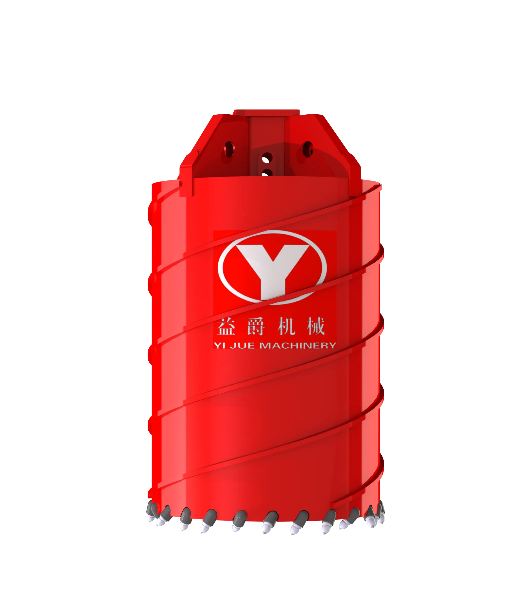
Understanding Core Barrels: Function, Types, and Key Advantages
Definition and Primary Function of Core Barrels in Geological and Construction Drilling
Core barrels are basically long metal tubes used to pull out whole pieces of underground material during drilling work. Standard drill bits just crush whatever they hit, but these special barrels actually keep rocks, dirt, and even concrete samples looking pretty much the same as they did underground. For geologists doing fieldwork, mining companies looking for valuable minerals, and engineers checking building sites, this matters a lot because they need to know exactly what's beneath the surface. The fact that core barrels reduce messiness and damage means professionals can study things like how strong different layers are, what kinds of minerals might be present, and how all these materials fit together in the ground.
Key Differences Between Core Barrels and Conventional Drilling Equipments
Traditional drilling tools prioritize speed and hole creation, often at the expense of sample quality. Core barrels, in contrast, are built for precision:
- Sample Preservation: Achieve recovery rates exceeding 95% in stable formations (Industry Report, 2023), significantly higher than the <50% typical with standard augers.
- Minimal Disturbance: Inner tube systems isolate cores from drilling fluids and debris.
- Depth Adaptability: Advanced models operate effectively beyond 3,000 meters, outperforming conventional equipment.
These advantages make core barrels vital for projects requiring high-fidelity samples, such as mineral resource estimation and geotechnical risk assessments.
Types of Core Barrels Used in Modern Geological Drilling Operations
Three primary configurations address diverse drilling challenges:
| Type | Application | Key Advantage |
|---|---|---|
| Single-Tube | Stable formations | Cost-effective for preliminary surveys |
| Double-Tube | Fractured rock or loose soils | Prevents sample disintegration |
| Triple-Tube | Highly fragile or unconsolidated zones | Maximizes core retention (up to 98%) |
Standardized sizes like NQ and PQ optimize performance across different drilling diameters and sample volume needs. Leading manufacturers now incorporate diamond-enhanced bits and anti-jamming mechanisms, reducing operational time by 30% in hard rock environments.
Precision Engineering and Critical Components of Core Barrel Systems
Core Barrel Components and Their Engineering Design
Today's core barrel systems come with parts built to last through tough underground work. The outer casing handles side pressure when things spin around down there. Inside, those specially made inner tubes keep samples intact because their insides are so smooth they don't scratch anything. For the split retainers and those anti-rotation keys, engineers run them through FEA simulations first. These little components need to hold up against twisting forces exceeding 12,000 Newton meters when drilling into solid rock formations. Pretty impressive stuff considering what these systems face day after day in real world operations.
Head Assembly and Drill String Integration for Optimal Alignment
The head assembly connects the core barrel to the drill string, ensuring concentric alignment even during directional drilling. It features optimized taper angles and thread profiles, along with hydrostatic bearings to absorb lateral vibrations. Torque-limiting grooves prevent over-tightening, and laser-etched markers allow rapid visual verification of alignment.
Spindle and Bearing System: Ensuring Rotational Stability Under Load
High-load spindle assemblies use duplex angular contact bearings rated for over 20,000 RPM. Case-hardened steel races paired with ceramic rolling elements reduce friction by 40% compared to standard bearings, maintaining rotational runout below 0.01 mm. This level of precision prevents wobble in fractured formations where sample degradation can occur rapidly.
Head Alignment: Ensuring Precise Core Collection
Advanced alignment systems employ gyroscopic sensors and pressure-sensitive shims to achieve angular deviations under 0.05°. Real-time telemetry adjusts hydraulic stabilizers on the drill string, compensating for inconsistencies in bedrock that historically led to skewed samples in metamorphic layers.
Advanced Material Selection for Durability in Harsh Drilling Environments
Material Selection for Durability and Performance in High-Stress Applications
The core barrels need to handle serious pressure situations, sometimes reaching around 50 thousand pounds per square inch, plus temperatures that can exceed 300 degrees Fahrenheit. Most big players in the field rely on high yield strength steel combined with specific heat treatment processes to keep these tools intact when they're taking hits from fractured rock formations again and again. When dealing with really tough stuff like quartzite drilling conditions, many manufacturers opt for tungsten carbide inserts attached to alloy steel bodies. These setups tend to last significantly longer than regular tool steels, cutting down on wear issues by somewhere between forty to sixty percent depending on the exact application and rock type being worked on.
Corrosion-Resistant Materials Such as Stainless Steel and Chrome Lining
When working in saltwater conditions or areas with acidic soil, finding materials that can handle both physical wear and chemical attacks becomes really important. Double layer chrome plating about 0.003 to 0.005 inches thick works pretty well against pitting issues in places where there's lots of chloride around. For geothermal projects, the inner tubes made from 316L stainless steel help stop rust formation. Some actual field testing has indicated that equipment using these materials lasts roughly 2.8 times longer when drilling through marine clay compared to regular carbon steel options. While no material is completely immune to degradation, this kind of performance makes a big difference in maintenance costs over time.
Performance Comparison of Alloy Steels in Demanding Drilling Conditions
A 2023 comparative study evaluated key drilling alloys:
| Material | Rockwell Hardness | Impact Toughness (ft-lb) | Corrosion Rate (mpy) |
|---|---|---|---|
| 4140 Chrome-Moly | 28–32 HRC | 45–55 | 12.8 |
| 4340 Nickel Steel | 32–36 HRC | 35–45 | 8.2 |
| AerMet 340 | 52–54 HRC | 25–35 | 5.1 |
Nickel-steel hybrids dominate deep-coring applications due to superior fatigue resistance. Meanwhile, advanced coatings like diamond-like carbon (DLC) are gaining traction in ultradeep projects (>5,000m), offering both extreme hardness and reduced friction.
Ensuring Core Integrity: Inner Tube Systems and Sample Retrieval Technology
Inner Tube Assembly: Preserving Core Integrity During Retrieval
Core barrels utilize inner tube systems where the inner tube remains stationary during drilling. This minimizes friction between the rotating outer barrel and the core, preserving structural fidelity. In fractured limestone, field tests show this design improves recovery rates by up to 34% (Geotechnical Drilling Journal, 2023).
Core Sample Retrieval Techniques and Maintaining Sample Quality
Retrieval methods now combine mechanical lifting with vacuum-assisted systems to extract delicate sediment layers without disturbance. Chrome-lined inner tubes have been shown to reduce sample adhesion by 62% in clay-rich environments, enhancing recovery consistency according to a 2024 Materials Engineering Study.
Challenges and Solutions in Fractured Rock Zones
Fractured granite and shale pose significant risks—28% of drilling projects report core fragmentation without mitigation. Double-tube configurations equipped with vibration-dampening stabilizers achieve 92% sample integrity in trials (ASTM D5434-22), making them ideal for complex lithologies.
Single vs. Double Tube Core Barrels in Sensitive Geological Formations
| Configuration | Best Use Case | Core Recovery Rate |
|---|---|---|
| Single-tube | Consolidated sandstone | 78-85% |
| Double-tube | Fractured basalt | 89-94% |
Double-tube systems offer enhanced protection through nested designs, while single-tube variants remain cost-effective for uniform rock masses. Matching barrel type to formation conditions yields a 19% efficiency gain in mineral exploration (Mining Technology Review, 2023).
Global Applications and Customization: Meeting Diverse Drilling Project Needs
Modern core barrel systems are highly adaptable, with manufacturers offering tailored configurations to meet specific geological demands. A 2023 study by the International Drilling Technology Consortium found that 78% of mineral exploration projects require custom-engineered core barrels to handle site-specific hardness, fracturing, or sediment types.
Customization of Core Barrels for Unique Drilling Environments
Manufacturers adjust inner tube diameters (from 42mm to 147mm), modify cutting shoe materials, and implement specialized retrieval systems. Coastal operations often use marine-grade stainless steel barrels to resist saltwater corrosion, while Arctic projects deploy low-temperature lubricants to prevent sample freeze-up.
Applications Across Critical Industries
- Mining: Reinforced core barrels extract undisturbed samples from kimberlite pipes and sulfide ore bodies
- Geotechnical: Wireline systems deliver urban foundation data with sub-0.5mm tolerance
- Environmental: Dual-wall reverse circulation barrels eliminate cross-contamination in groundwater studies
Specialized Deployment Scenarios
Triple-tube core barrels are increasingly used in infrastructure projects like bridge piling analysis, achieving 98.3% recovery in mixed-face conditions per ASCE 2024 standards. Offshore surveys now employ pressure-compensated systems capable of operating at depths of 3,000 meters while maintaining precise orientation.
Adaptation in Complex Geological Zones
In Southeast Asian geotechnical projects, customized core barrels reduced core loss in fractured limestone from 35% to 6% through three key upgrades:
- Carbide-tipped split inner liners
- Modular bearing assemblies supporting 25° deviation drilling
- Real-time vibration dampening sensors
This adaptability ensures core barrels remain indispensable across mining, construction, energy, and scientific drilling sectors worldwide.
FAQ Section
What is a core barrel and what is its main function?
A core barrel is a long metal tube designed to extract whole pieces of underground material during drilling operations, preserving the samples' integrity for analysis.
How do core barrels differ from traditional drilling tools?
Core barrels are designed for precision and sample preservation, whereas traditional drilling tools focus on speed and hole creation.
What types of core barrels are available?
There are single-tube, double-tube, and triple-tube configurations, each designed for different geological conditions.
What factors are considered in the material selection for core barrels?
Material selection emphasizes durability, high-stress performance, and corrosion resistance.
How do core barrels facilitate sample retrieval?
Core barrels utilize inner tube systems that remain stationary during drilling to reduce friction and preserve sample integrity, along with advanced retrieval techniques that minimize disturbance.
Table of Contents
- Understanding Core Barrels: Function, Types, and Key Advantages
- Precision Engineering and Critical Components of Core Barrel Systems
- Advanced Material Selection for Durability in Harsh Drilling Environments
- Ensuring Core Integrity: Inner Tube Systems and Sample Retrieval Technology
- Global Applications and Customization: Meeting Diverse Drilling Project Needs